
 Business License

Grinding Circuit Specifications for Ore Beneficiation
Grinding circuit specifications are the backbone of every mineral processing flowsheet, because the mill sets the size distribution that every downstream unit has to live with. A specification document is not a marketing sheet, and it is a precise record of the duty a mill must meet. Getting those numbers right at the design stage saves years of pain in the plant.
This guide explains how grinding circuit specifications are written and how to read them. It covers circuit configuration, the key parameters of a ball mill, the product targets that downstream stages demand, and the sizing method that ties throughput to power. It ends with practical questions and a worked example from real projects.
1. Grinding Circuit Configurations and Their Specifications
Three configurations cover most concentrators, and each one produces a different specification sheet. A single-stage closed circuit pairs one mill with a classifier or hydrocyclone in a loop, which is the simplest arrangement. Two-stage closed circuits split coarse and fine grinding between two mills, which suits hard ores that need a fine product. A SAG mill followed by a ball mill handles large tonnages of variable ore in a shorter line.
These circuits reach anywhere from 100 tpd to 100,000 tpd, depending on the ore and the plant scale. The specification for grinding circuit capacity must therefore state the design tonnage clearly. Capacity is normally quoted both as tonnes per hour and as tonnes per day, and the two must agree with the operating hours assumed.
Classification is the other half of the circuit. Hydrocyclones are the standard choice for fine grinding, and they split the mill discharge into an overflow product and an underflow that returns to the mill. Spiral classifiers or screens may be used for coarser duties or for ores sensitive to slimes. Whichever device is chosen, its cut point and circulating load define the product size the circuit can hold.
A well-written specification therefore fixes four things at once: the fresh feed rate, the feed size, the target product size and the classifying device. Everything else in the document follows from those four anchors.
2. Ball Mill Specifications and Key Parameters
A ball mill specification is a list of dimensions and duties that together define how the machine will perform, and the ball mill parameters are what an engineer reads first. Shell diameter and length set the internal volume, which in turn sets the residence time for a given feed rate. Amill Machinery Equipment works from effective volume rather than shell volume for this reason, because the usable space after liners and the grinding charge are accounted for is what actually sets residence time.
Rotation speed is normally quoted as a percentage of critical speed, the speed at which the charge would centrifuge against the shell. Most ball mills run somewhere between roughly 65 and 78 percent of critical speed, and that range balances the cataracting action that breaks coarse particles against the abrasion that grinds fines. Too slow and the charge simply slides, while too fast the balls cling to the shell and do no useful work. These ball mill parameters are read together.
Ball charge weight is quoted in tonnes, and it is usually expressed as a percentage of the mill's internal volume, commonly around 30 to 45 percent. Ball diameter and the size distribution, known as the ball charge makeup, are set from the feed size and the target product. Large balls break coarse feed while smaller balls grind the finer fractions, so most mills carry a graded charge.
Liner design affects lift, wear life and power draw, and operators choose between wave, lifter and rubber profiles depending on the ore and the duty. Motor power, expressed in kilowatts, is the headline ball mill parameter that ties all the geometry to the achievable throughput. Discharge arrangement, either grate or overflow, controls how quickly material leaves the mill.
The table below collects the parameters that a typical ball mill specification must state. The values shown are common planning ranges for mineral processing duty, and each project should fix its own ball mill parameters from test work.
| Parameter | Typical Range | Notes |
|---|---|---|
| Shell diameter | Roughly 1.5 to 6.0 m | Larger diameters raise capacity and power draw |
| Shell length | Usually 3.0 to 10.0 m | Longer shells suit finer grinding duties |
| Effective volume | Around 5 to 200 cubic meters | Usable space after liners and charge |
| Rotation speed | Typically 65 to 78 percent of critical | Sets cataracting versus cascading action |
| Ball charge weight | Usually 30 to 45 percent of volume | Higher charge raises power and throughput |
| Ball diameter | Roughly 20 to 100 mm | Graded charge from coarse to fine balls |
| Liner type | Wave, lifter, rubber or steel | Chosen for lift and wear life |
| Motor power | Around 100 to 8,000 kW | Primary size and throughput driver |
| Discharge type | Grate or overflow | Controls pulp level and retention |
Each line in that table interacts with the others, so a change to one figure usually forces a revisit of the rest. Sizing never happens in isolation, and a proper specification shows the trade-offs rather than a single fixed answer.
3. Grinding Product Specifications and Target Size
The product specification is written from the downstream process backward, because the mill exists to feed flotation, gravity or cyanidation at the right size. The usual unit is P80, the screen size through which 80 percent of the product passes, and it is the most important number on the sheet. For flotation and cyanidation of gold and copper ores, a P80 between 75 and 150 micrometers is common, though specific deposits may sit outside that band.
Finer grinding liberates more mineral but costs far more energy and produces more slimes that disturb flotation and thickeners. The optimal P80 is therefore the coarsest size that still achieves the target recovery, and that point is found by test work rather than assumption.
Circulating load and the return sand ratio describe how much material recycles through the mill, and they are reliable indicators of circuit stability. A circulating load of roughly 250 percent is common in closed ball mill circuits, and much higher values usually signal a classifying problem or an overloaded mill. The return sand ratio describes the proportion of the mill feed consisting of returned oversize rather than fresh feed.
Classification efficiency measures how well the classifier separates fine product from coarse returns, and a poor cut point wastes grinding energy on material that is already fine enough. Together, P80, circulating load and classification efficiency let an operator judge whether the grinding circuit is doing its job without ever opening the mill.
4. Sizing the Mill With Bond Work Index and Throughput
Mill sizing starts with the Bond ball mill work index, a laboratory measure of how much energy the ore needs to be ground from one size to another. The index is expressed in kilowatt hours per tonne, and it lets an engineer estimate the specific energy required for a given size reduction. From there, the required motor power follows directly from the throughput.
The calculation is straightforward once the numbers are known. Multiply the specific grinding energy, usually in kilowatt hours per tonne, by the design throughput in tonnes per hour to get the required power in kilowatts. Because throughput is often quoted in tonnes per day, a quick division by the operating hours brings the figure onto the same basis.
A worked figure makes this concrete. If an ore needs around 14 kilowatt hours per tonne to reach the target P80, and the plant runs 2,000 tonnes per day over 20 hours, the hourly rate is about 100 tonnes per hour. Multiplying the two gives roughly 1,400 kilowatts of required grinding power, which then sets the motor size with a modest allowance for losses.
Two checks then close the loop. First, confirm that the chosen mill volume gives enough grinding circuit capacity for the residence time implied by the circulating load. Second, confirm that the ball charge and speed suit the ore hardness. Our team at Henan Amill Machinery Equipment Co Ltd runs these grinding circuit capacity calculations during equipment selection.
4.1 Converting Between Tonnes per Hour and Tonnes per Day
Capacity is quoted in both hourly and daily terms, and the conversion depends entirely on the operating hours assumed. A mill rated at 100 tonnes per hour delivers roughly 2,400 tonnes per day if it runs 24 hours, but only about 1,600 tonnes per day if availability and maintenance limit it to 16 hours. Specifications must state that grinding circuit capacity assumption, otherwise the two figures look inconsistent and invite costly errors.
Availability factors matter as much as the arithmetic, because liner changes and maintenance remove productive hours from the calendar. Plants plan around a realistic availability rather than a theoretical maximum, and that figure belongs on the sheet next to the tonnage.
5. Matching Grinding Product to Downstream Requirements
The product size from the mill must match the liberation size that each downstream process needs, and those needs are rarely identical. Flotation usually prefers a coarser grind than cyanidation, because over-grinding creates slimes that depress recovery and dilute concentrate. A cyanidation circuit, by contrast, often wants a finer product so that gold is exposed to the leach solution quickly.
Where a plant treats a single ore through both routes, the grinding specification has to satisfy the tighter of the two requirements without wrecking the other. Designers often set an intermediate P80 and accept a small recovery penalty at one stage, or they add a regrind mill ahead of the stage that needs finer feed. The choice depends on the ore and the value of the metal.
Gravity separation sits at the coarse end and wants a fairly wide size distribution, so that coarse gold can be caught before it is ground too fine to recover. This is one reason gravity units are often placed in the grinding circuit loop itself, and a mill specified purely for a fine flotation feed may recover less coarse gold.
Water chemistry and pulp density also travel with the product specification, because thickeners and leach tanks need a consistent feed density to run well. A grinding circuit that swings widely in density will upset everything downstream, no matter how good its size distribution is.
A few years ago, a copper-gold operation in South America ran a ball mill specified for a P80 of about 120 micrometers, with a circulating load near 260 percent and an installed power of roughly 1,800 kW. Flotation recovery of copper sat around 88 percent, and gold reporting to the concentrate was lower than expected. Test work showed that the grind was too coarse for the gold, so the project added a regrind mill and tightened the primary P80 to roughly 75 micrometers. Copper recovery rose to about 91 percent and gold recovery improved by around three percentage points, while the added power was covered by the existing motor margin.
A second case, some time ago, involved an African gold ore that came in harder than the design work index assumed. Amill Machinery rechecked the bond work index on the new ore, recalculated the power draw from the measured value rather than the original assumption, and confirmed that the mill was rated near 900 kW at a design P80 of 100 micrometers. The plant had been struggling to hold that size as the ore hardened.
6. FAQ: Grinding Circuit Specifications
These questions reflect the points that plant owners and metallurgists raise most often when reviewing a grinding specification. The answers assume typical hard-rock duty, so adjust the figures to your own ore and test results before you commit to an equipment order.
6.1 What must a grinding circuit specifications sheet include?
A complete grinding circuit specifications sheet should state the fresh feed rate, the feed size, the target product size as a P80 value, and the classifying device. It should add the mill dimensions, effective volume, rotation speed, ball charge weight, ball diameter range, liner type, motor power in kilowatts and discharge arrangement. The circulating load and the assumed operating hours belong on the sheet too.
Without those figures, the document is a catalogue entry rather than a specification, and it cannot be checked against the ore or the downstream duty. Amill Machinery Equipment prepares these sheets from test data.
6.2 How do ball mill parameters affect product size?
Ball mill parameters control product size through three main levers, which are mill speed, ball charge and ball diameter. Running closer to the upper end of the usual speed range increases cataracting action and produces a finer product, while a lower speed leaves more coarse material behind. A graded ball charge with large and small balls grinds both coarse and fine fractions, so the makeup has to suit the feed and the target size.
Longer shells and higher charge volumes give more grinding energy and a finer product, but they also raise power draw and liner wear. The right ball mill parameters follow from test work rather than a fixed rule.
6.3 How is grinding circuit capacity calculated from throughput?
Grinding circuit capacity is calculated by first finding the specific grinding energy for the ore, usually from the Bond work index, and then multiplying it by the design throughput in tonnes per hour. That product gives the required motor power in kilowatts. If the throughput is quoted in tonnes per day, divide by the assumed operating hours to bring it onto an hourly basis before multiplying.
A margin is then added for efficiency losses and surges, and the mill volume is checked against the residence time implied by the circulating load. Because the daily figure depends on operating hours, the assumption must be stated clearly, or the two capacity figures will not agree.
6.4 Why does P80 matter more than a single size figure?
P80 matters because no mill produces a single uniform particle size, so a cut point describing the size through which 80 percent of the product passes is far more useful than an average. It links directly to liberation, because the coarse tail of the distribution often holds minerals that are still locked with gangue. Downstream units such as flotation cells and leach tanks are then designed around that P80 and the distribution behind it.
Finer P80 values raise power and wear, so the target is usually set as the coarsest size that still reaches the required recovery, and suitable ball mill parameters follow from that target. Test work is the only reliable way to fix it.
6.5 How should the grind size match flotation and CIL feed needs?
The grind size should satisfy the tighter of the downstream requirements, because flotation and CIL rarely want identical products. Flotation usually prefers a coarser feed that limits slimes and protects concentrate grade, while CIL often wants a finer feed so gold dissolves quickly into the leach solution. Where one plant serves both, designers either set an intermediate P80 or add a regrind mill ahead of the finer stage.
Gravity separation sits at the coarser end and benefits from a wide size distribution, which is why gravity units often sit inside the grinding loop itself. Matching the product to each downstream stage is the whole point of the specification.
Recently Posted
-
What Is a Lead Zinc Flotation Plant? A Complete Overview
October 16, 2026A lead zinc flotation plant definition is the starting point of this overview, and the term describes a mineral processing install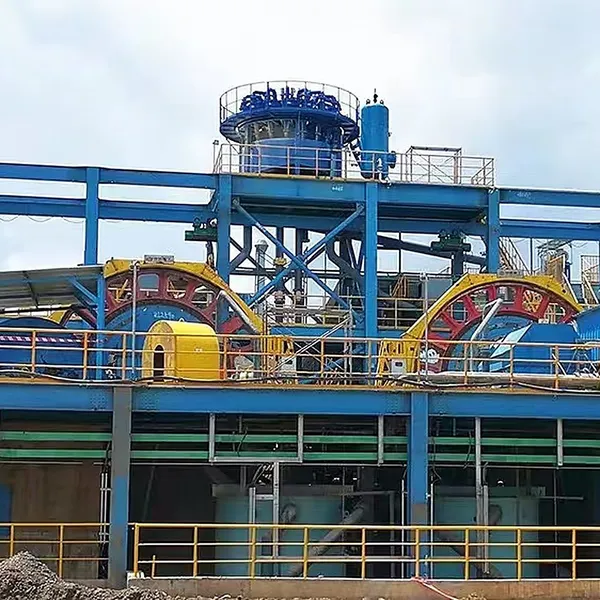 Read More
 -
Screening Plants for Indonesian Nickel Laterite
October 16, 2026Indonesia sits at the center of the global nickel supply chain, and most of that output comes from laterite ore mined in Sulawesi,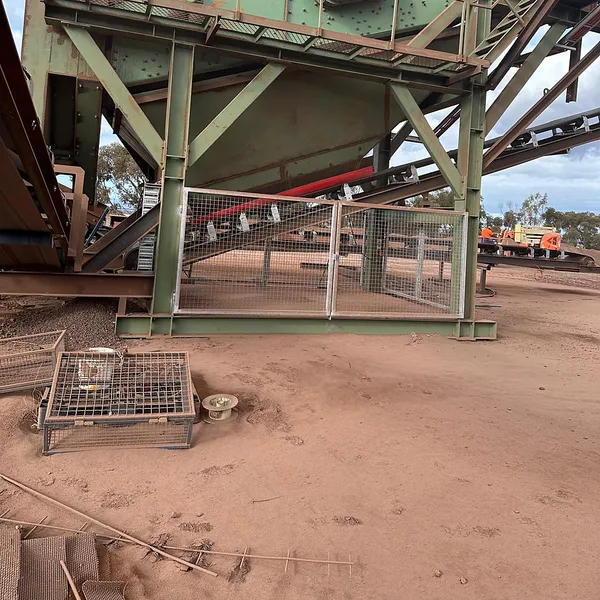 Read More
 -
Quality Control in Flotation Cell Manufacturing
October 16, 2026A flotation cell looks simple from the outside: a tank, a rotor, a drive and an air pipe. Inside, it is a pressure vessel for pulp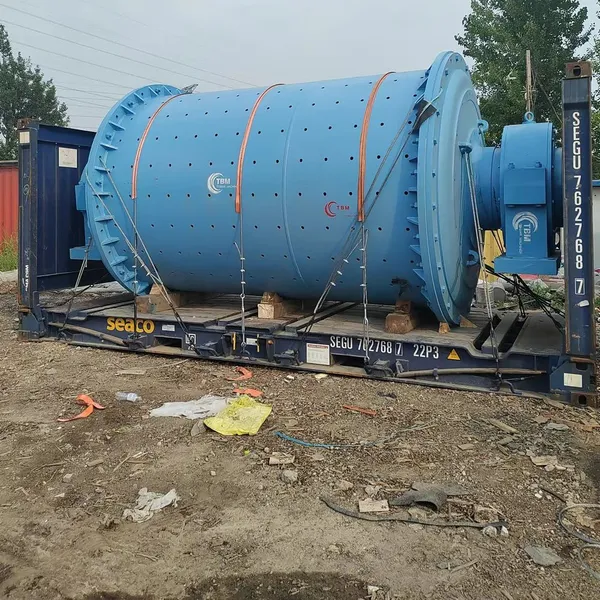 Read More
 -
Gold CIL vs Gold CIP: Which Circuit Fits Your Ore
October 15, 2026The gold cil vs cip question comes up in nearly every cyanidation project review, and the answer is rarely obvious from the head g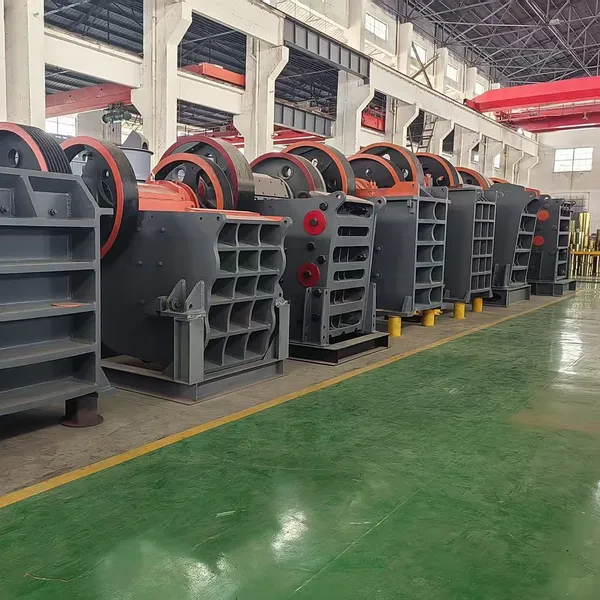 Read More

Contact Us
Recommended Products
-
 200 Tpd High Recovery Lead-zinc Ore Flotation PlantUS$ 15000MOQ: 1 Combo
 -
China Hot Sale 50-600 Tpd Copper Ore Flotation Plant With Rich ExperienceUS$ 20000MOQ: 1 Combo
-
Copper Ore Processing Flotation PlantUS$ 25000MOQ: 1 Combo
-
Hard Rock Gold Processing CIL PlantNegotiableMOQ: 1 Set
-
Gold Ore CIL Processing PlantNegotiableMOQ: 1 Set
-
Gold CIL Plant With One Stop Gold Processing EquipmentNegotiableMOQ: 1 Set
-
Gold CIP Plant for Efficient Carbon-in-Pulp Gold RecoveryNegotiableMOQ: 1 Set
-
Gold CIL Plant Engineering Design Service Metallurgical Process OptimizationNegotiableMOQ: 1 Set
-
Gold Extraction CIL Processing Plant High Efficiency Carbon Leach Gold ProcessUS$ 5000MOQ: 1 Set
-
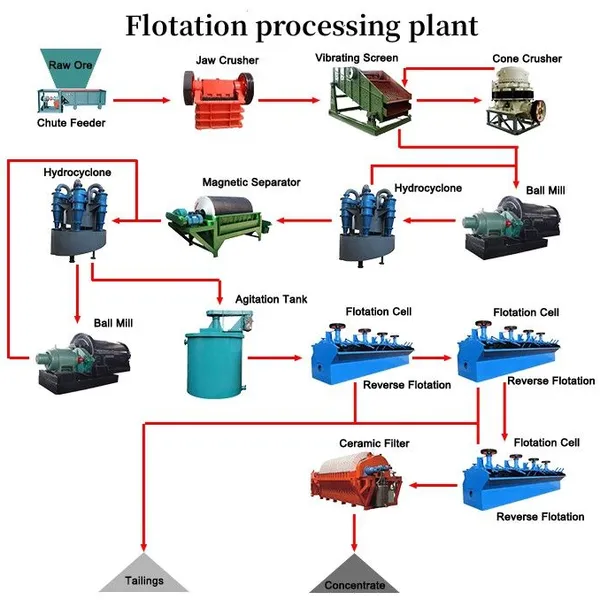
Copper Ore Flotation Beneficiation ProcessNegotiableMOQ: 1 Set
-
Copper Flotation Plant With Advanced Flotation Machine, Customized Mineral Processing Solution, Stable Copper RecoveryNegotiableMOQ: 1 Set
-
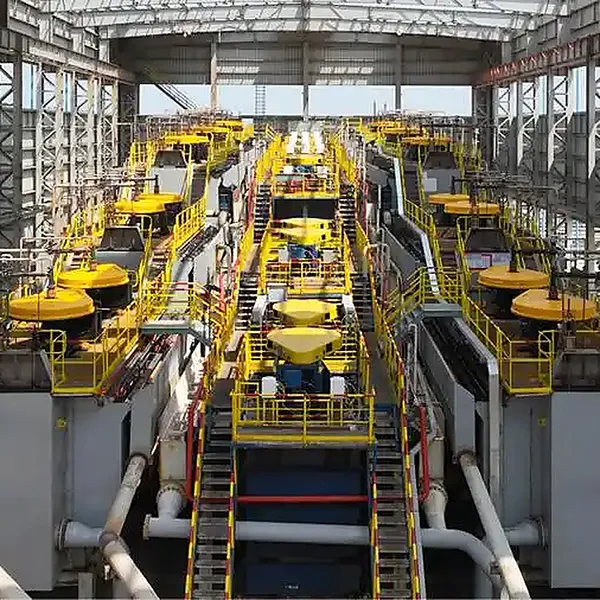
Mobile Crusher | Crawler and Wheeled Crushing PlantNegotiableMOQ: 1 Set
-
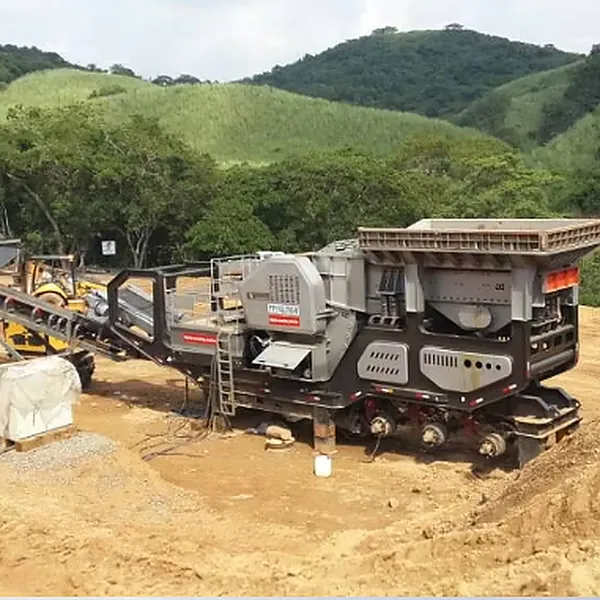
Jaw Crusher Price ,big Stone Jaw CrusherUS$ 25000MOQ: 1 Set
-
100- 500 Tpd Gold CIL CIP Processing PlantUS$ 25000MOQ: 1 Set
-
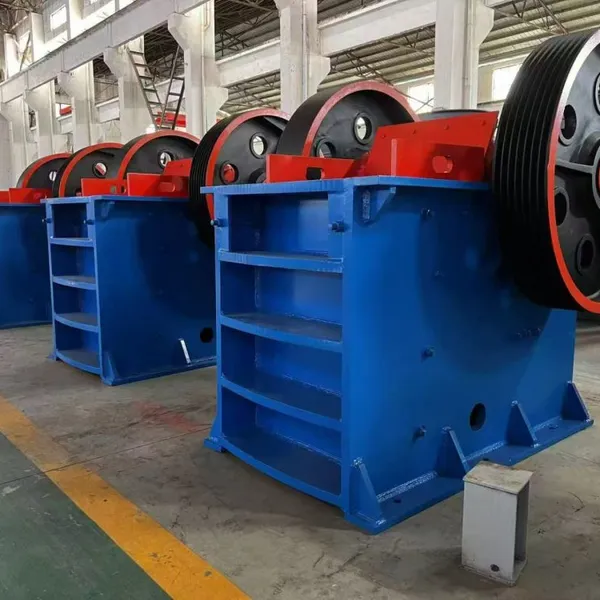
River Stone Granite Stone Crusher PlantUS$ 25000MOQ: 1 Combo
-
500 Tpd Rotary Kiln Gypsum Production Line for Sale in AfricaUS$ 25000MOQ: 1 Combo
-
Gold CIL CIP Extraction Plant 100-300 TPD Activated Carbon Leaching 95% Recovery Rate EPC ProjectNegotiableMOQ: 1 Set
-
Gold CIL CIP Leaching Plant 100-500 TPD Activated Carbon Leaching High Efficiency EPC ProjectNegotiableMOQ: 1 Set
-
High Efficiency Lead Zinc Flotation Plant for Ore RecoveryNegotiableMOQ: 1 Set
-
Lead Zinc Flotation Processing Plant for Polymetallic OreNegotiableMOQ: 1 Set