
 Business License

What Is a Lead Zinc Flotation Plant? A Complete Overview
A lead zinc flotation plant definition is the starting point of this overview, and the term describes a mineral processing installation built to separate lead and zinc minerals from associated gangue and from one another. In practice, a plant of this kind is the sequence of crushing, grinding, flotation and dewatering stages that sits between the mine stockpile and a saleable concentrate. This overview explains what that installation is, which ore types it handles, and how each stage contributes to its final separation.
The explanation here is intended for mine owners, mineral processing engineers and project buyers who want a clear picture before they specify equipment, and it avoids marketing language in favour of how the pieces fit together. Because a single description cannot cover every flowsheet, the figures quoted are typical planning ranges rather than fixed values.
1. Lead Zinc Flotation Plant Definition and Where It Fits
A lead zinc flotation plant definition rests on two ideas that belong together. The first is froth flotation itself, a process that uses the different surface chemistry of minerals to float some particles and sink others in a water bath. The second is the specific ore body, which almost always carries lead and zinc minerals so closely intergrown that they must be separated with selective reagents rather than a simple density difference.
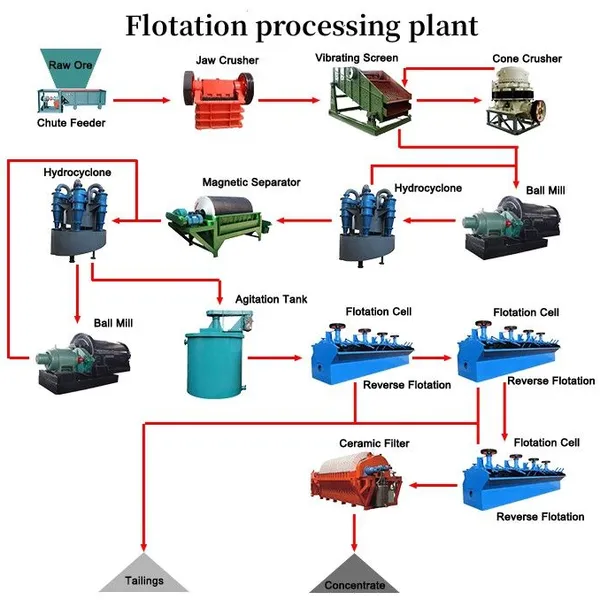
A plant built around these ideas is not a single machine. It is a connected set of unit operations: ore handling, comminution, reagent conditioning, flotation cells, concentrate thickening and filtration, tailings management and water recovery. Each unit supports the next, and the quality of the final concentrate depends on how well they suit the ore being treated.
The table below summarises the main sections of a typical lead zinc flotation plant definition and the function each performs. Ranges shown are planning figures and shift with ore hardness, liberation size and plant capacity.
| Section | Main function | Typical planning range |
|---|---|---|
| Crushing and grinding | Liberate lead and zinc minerals from gangue | Feed reduced to roughly P80 74 microns |
| Conditioning | Mix reagents and adjust pulp chemistry | Pulp held at around 25-35 percent solids |
| Lead rougher flotation | Recover galena into a lead concentrate | Mass pull usually 5-15 percent |
| Zinc rougher flotation | Recover sphalerite after activation | Mass pull normally 8-20 percent |
| Dewatering | Thicken and filter both concentrates | Final moisture often below 12 percent |
The plant usually sits close to the mine because transporting low-grade run-of-mine ore long distances rarely makes sense. A short haul from the pit or underground working keeps trucking costs down and lets the operation respond quickly to changes in head grade.
2. Lead Zinc Ore Types and Polymetallic Ore Flotation Basics
The ore body sets the whole design, so ore type is studied before any flowsheet is drawn. Lead and zinc are usually present as sulphides, with galena as the main lead mineral and sphalerite as the main zinc mineral. These two minerals carry most of the payable metal, and their texture and grain size determine how fine the ore must be ground before they separate cleanly.
Associated minerals matter nearly as much. Pyrite is common and often floats readily, which complicates the selectivity of the separation. Chalcopyrite may also appear, turning a straightforward lead-zinc circuit into a copper-lead-zinc problem that needs an extra stage. When several payable metals occur together in one deposit, the ore is described as polymetallic, and polymetallic ore flotation then has to manage competing surface chemistries in a single circuit.
Polymetallic ore flotation is generally harder than treating a single-metal sulphide ore. Each mineral responds differently to collectors, depressants and activators, and a reagent that helps one metal often harms the selectivity for another. The usual response is a staged flow, where one mineral is floated and depressed in turn so the reagents can be changed between stages. This is why polymetallic ore flotation rewards careful testwork long before any cells are ordered.
The table below lists common lead-zinc minerals along with notes on how each behaves in a flotation cell. Behaviour differs with grain size, weathering and the amount of pyrite present.
| Mineral | Metal | Behaviour in flotation |
|---|---|---|
| Galena | Lead | Floats easily with xanthate, sometimes too readily |
| Sphalerite | Zinc | Usually needs activation before it will float |
| Pyrite | Iron | Often floats with the sulphides and dilutes grade |
| Chalcopyrite | Copper | Requires a separate stage when present |
| Pyrrhotite | Iron | Difficult to depress and consumes reagents |
Understanding these behaviours early saves rework later. Testwork on a representative sample is the usual way to confirm which minerals will report to which concentrate and how much reagent each will demand.
3. The Lead Zinc Ore Flotation Process Step by Step
A lead zinc ore flotation process normally begins with size reduction. Run-of-mine ore is crushed in two or three stages and then ground in a rod mill or ball mill until the lead and zinc minerals are liberated from the gangue and from each other. Grinding is the most energy-intensive step in the plant and also the most influential, because under-grinding leaves locked particles while over-grinding creates slimes that flotation cannot handle well.
The ground pulp then passes to conditioning, where reagents are added and mixed before flotation starts. Lime is commonly used to raise the pH, a collector such as a xanthate or dithiophosphate is added to make the target minerals water-repellent, and a frother helps stable bubbles form. Copper sulphate is often added later as an activator when sphalerite must be floated.
Two basic flowsheets dominate the lead zinc ore flotation process. In the sequential or selective route, lead is floated first and depressed later so zinc can be recovered from the same pulp. In the alternative bulk route, lead and zinc are floated together into a single bulk concentrate and separated afterwards. The choice depends on the ore texture, the liberation size and the concentrate grades the market expects.
The separation stage is where the flowsheet earns its name. In a lead circuit, zinc is depressed with zinc sulphate and sodium sulphite, or with cyanide in older designs, so galena floats alone. In the zinc circuit that follows, the depressed sphalerite is activated with copper sulphate and floated. Each stage includes rougher, scavenger and cleaner cells arranged so that recovery is maximised in the roughers and grade is lifted in the cleaners.
Dewatering closes the process. Both concentrates are thickened, filtered and dried to a moisture the smelter will accept, while the tailings are pumped to a storage facility and the recovered water returns to the circuit. The table below outlines typical operating parameters for the main flotation stages.
| Stage | Typical pH | Key reagent |
|---|---|---|
| Lead rougher | usually 8-10 | Xanthate collector with frother |
| Zinc rougher | typically 10-11 | Copper sulphate activator |
| Zinc-sulphur separation | around 11 | Lime with a depressant for pyrite |
| Lead cleaning | often 9-10 | Small collector additions and pH trim |
| Zinc cleaning | usually 11 or above | Lime and additional activator |
Small changes in pH or reagent dose can shift both grade and recovery, so the circuit is normally adjusted against regular assays rather than left on a fixed setting. This control discipline, more than any single equipment choice, decides whether a lead zinc ore flotation process meets its targets.
4. Reagents, Grind Size, pH and Concentrate Quality
Reagents are the tools that make selective flotation possible, and each one has a clear job. Xanthates and dithiophosphates act as collectors that attach to sulphide surfaces and make them float. Frothers such as pine oil or a synthetic alcohol stabilise the froth so bubbles carry the particles to the surface. Lime controls pH and also depresses pyrite, while copper sulphate activates sphalerite so it can be recovered after the lead has been removed.
Depressants complete the set. Zinc sulphate combined with sodium sulphite keeps sphalerite down during the lead float, and cyanide has historically been used for the same purpose. Because cyanide is hazardous, many newer plants prefer the sulphate and sulphite combination, which is generally easier to manage and less costly to handle.
Grind size is the single most important process variable. Too coarse and the lead and zinc minerals stay locked together, so both concentrates lose grade. Too fine and the pulp carries slimes that consume reagents and reduce flotation efficiency. Most lead zinc circuits are designed around a primary grind in the range of P80 60 to 100 microns, with the exact target set by the liberation study.
Concentrate quality is described by grade and recovery, two figures that pull against each other. A typical lead concentrate might assay around 55 to 70 percent lead with recovery near 85 to 92 percent, while a zinc concentrate commonly runs at about 48 to 58 percent zinc with recovery generally in the 80 to 90 percent range. Because pyrite and other sulphides often accompany the target minerals, the zinc-sulphur separation stage is usually where the final grade is won or lost.
The table below collects typical operating targets for a mid-sized lead zinc circuit. These are planning values and every ore body will set its own realistic numbers.
| Parameter | Typical target | Effect if missed |
|---|---|---|
| Primary grind size | roughly P80 60-100 microns | Locked particles or excess slimes |
| Lead concentrate grade | around 55-70 percent lead | Lower smelter payment and penalties |
| Zinc concentrate grade | typically 48-58 percent zinc | Penalties and higher treatment charges |
| Lead recovery | usually 85-92 percent | Metal lost to tailings |
| Zinc recovery | often 80-90 percent | Reduced payable output |
Tailings handling is part of the same discipline. Recovered water from the tailings thickener is returned to the process, which reduces fresh water demand and keeps the reagent balance steadier across the day. Amill Machinery treats that return line as part of the flowsheet rather than a utility.
5. Plant Layout, Commissioning and Typical Results
Layout follows the process logic. Ore moves in one direction from crushing through grinding, flotation and dewatering, with the reagent area placed where doses can be adjusted easily. Space is left around flotation banks for maintenance access, and the tailings line is routed so that it can be isolated without stopping the circuit.
Commissioning is where the design meets the ore. The plant is started on a single line, reagents are trimmed stage by stage, and the flowsheet is adjusted as assays come back. This period usually lasts several weeks, and engineers check grind size, pH, reagent dose and froth depth before touching the cell arrangement. Our team supports this phase with process design, equipment selection, manufacturing, delivery, installation guidance and technical support, so a new circuit starts on a known baseline rather than guesswork.
Henan Amill Machinery Equipment Co Ltd manufactures crushing, screening, grinding, washing, gravity separation, flotation and magnetic separation equipment as well as complete mineral processing plants. The company also supplies gold, copper, lead-zinc, iron ore and manganese ore circuits, and it works from a 10,000-30,000 m2 manufacturing facility. Amill Machinery Equipment covers lead zinc circuits for both new projects and upgrades of existing plants.
A few years ago, an owner brought a polymetallic deposit to our attention with galena, sphalerite and a notable pyrite content. Amill Machinery sized the plant for roughly 800 tonnes per day, with testwork suggesting a primary grind of about P80 75 microns. The flowsheet used selective flotation, with lime holding the lead rougher near pH 9, copper sulphate activating sphalerite for the zinc circuit, and a zinc-sulphur separation stage to depress pyrite. Predicted grades were around 62 percent lead and roughly 52 percent zinc, with recoveries near 88 percent for lead and about 84 percent for zinc.
Some time ago, a smaller operation running about 300 tonnes per day struggled with zinc grade because pyrite kept floating into the zinc concentrate. Adding a lime stage ahead of the zinc cleaners lifted the zinc grade from roughly 46 percent to about 54 percent without a large penalty in recovery.
A lead zinc flotation plant definition is ultimately a description of how geology is turned into a saleable product. The ore sets the minerals, the minerals set the reagents, and the reagents set the flowsheet.
6. FAQ: Lead Zinc Flotation Plant Basics
6.1 What exactly does a lead zinc flotation plant produce?
A lead zinc flotation plant produces two separate concentrates, one rich in lead and one rich in zinc, each sent to a smelter for further refining. The lead concentrate is mostly galena and typically assays around 55 to 70 percent lead, while the zinc concentrate is mostly sphalerite and commonly runs at about 48 to 58 percent zinc.
Where a deposit also carries copper or silver, additional concentrates or credits may be produced. A lead zinc flotation plant definition therefore covers a tailings stream as well, one that is thickened, stored and partly recycled as process water.
6.2 How is the lead zinc ore flotation process different from treating a single metal ore?
The main difference is that two minerals must be floated and depressed in turn rather than one. In a lead zinc ore flotation process, galena is floated first while sphalerite is held down with zinc sulphate and sodium sulphite, then the sphalerite is activated with copper sulphate and recovered. A single metal circuit rarely needs this switching of reagents within one pulp.
Associated pyrite and chalcopyrite add further complexity, so the flowsheet usually includes cleaning and separation stages that a simpler ore would not require.
6.3 Why is polymetallic ore flotation considered more difficult?
Polymetallic ore flotation is harder because several payable minerals compete for the same reagent system. A collector that lifts lead can also help pyrite float, and an activator added for zinc may depress or contaminate another stream.
Deposits of this type also tend to show fine intergrowth, so the ore must be ground finely enough to liberate each mineral, which in turn creates slimes that reduce efficiency. The usual answer is a staged flowsheet with careful pH control and depressant dosing. Testwork on a representative sample is normally needed before the circuit is fixed.
6.4 What grind size and pH does a lead zinc circuit usually need?
Most circuits are designed around a primary grind in the range of P80 60 to 100 microns, with the exact figure set by the liberation study. The lead rougher often runs at about pH 8 to 10, while the zinc rougher generally operates around pH 10 to 11 so sphalerite can be activated and pyrite depressed. Lime is the usual reagent for holding that pH and for helping to keep iron sulphides down.
Grind size and pH interact closely. Grinding too coarse leaves locked particles, and grinding too fine creates slimes that consume reagents and slow flotation, so both variables are trimmed together during commissioning rather than set once.
6.5 What recovery and concentrate grade can a new plant expect?
Well-designed circuits commonly reach lead recovery around 85 to 92 percent and zinc recovery generally in the 80 to 90 percent range. Lead concentrate grades often fall near 55 to 70 percent lead, and zinc concentrate grades typically land around 48 to 58 percent zinc. Actual results depend on liberation size, the amount of pyrite present and the control discipline applied on site.
Because grade and recovery pull against each other, a plant can usually trade one for the other by adjusting reagent dose and cleaner configuration, so the target is properly fixed after testwork rather than assumed in advance.
Recently Posted
-
Screening Plants for Indonesian Nickel Laterite
October 16, 2026Indonesia sits at the center of the global nickel supply chain, and most of that output comes from laterite ore mined in Sulawesi,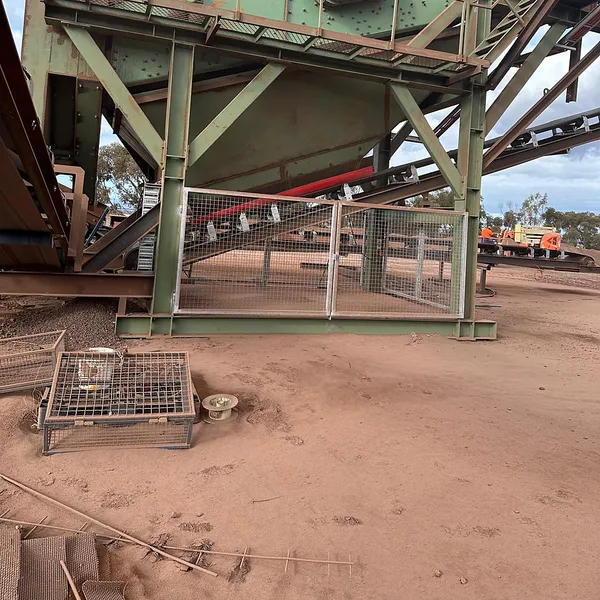 Read More
 -
Quality Control in Flotation Cell Manufacturing
October 16, 2026A flotation cell looks simple from the outside: a tank, a rotor, a drive and an air pipe. Inside, it is a pressure vessel for pulp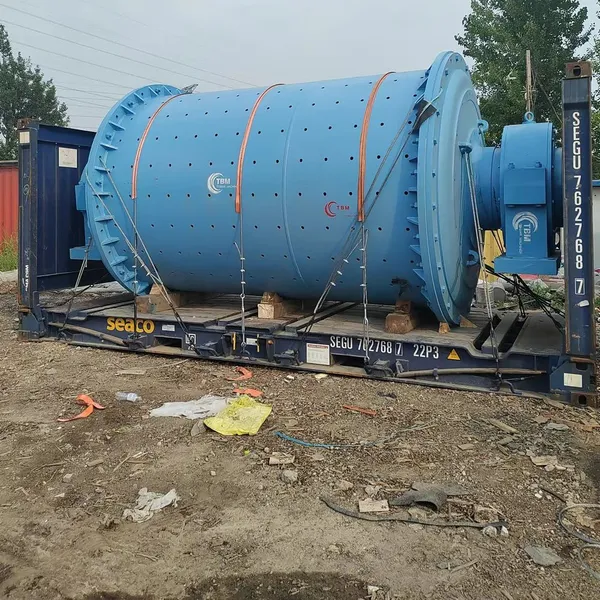 Read More
 -
Grinding Circuit Specifications for Ore Beneficiation
October 15, 2026Grinding circuit specifications are the backbone of every mineral processing flowsheet, because the mill sets the size distributio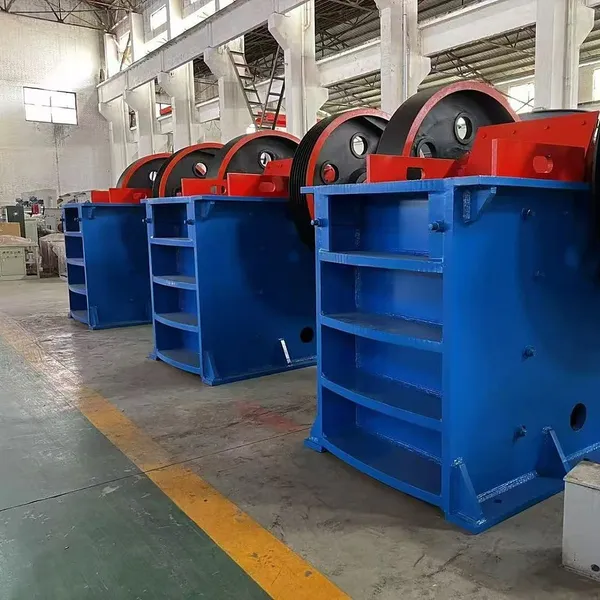 Read More
 -
Gold CIL vs Gold CIP: Which Circuit Fits Your Ore
October 15, 2026The gold cil vs cip question comes up in nearly every cyanidation project review, and the answer is rarely obvious from the head g Read More

Contact Us
Recommended Products
-
 200 Tpd High Recovery Lead-zinc Ore Flotation PlantUS$ 15000MOQ: 1 Combo
 -
China Hot Sale 50-600 Tpd Copper Ore Flotation Plant With Rich ExperienceUS$ 20000MOQ: 1 Combo
-
Copper Ore Processing Flotation PlantUS$ 25000MOQ: 1 Combo
-
Hard Rock Gold Processing CIL PlantNegotiableMOQ: 1 Set
-
Gold Ore CIL Processing PlantNegotiableMOQ: 1 Set
-
Gold CIL Plant With One Stop Gold Processing EquipmentNegotiableMOQ: 1 Set
-
Gold CIP Plant for Efficient Carbon-in-Pulp Gold RecoveryNegotiableMOQ: 1 Set
-
Gold CIL Plant Engineering Design Service Metallurgical Process OptimizationNegotiableMOQ: 1 Set
-
Gold Extraction CIL Processing Plant High Efficiency Carbon Leach Gold ProcessUS$ 5000MOQ: 1 Set
-
Copper Ore Flotation Beneficiation ProcessNegotiableMOQ: 1 Set
-
Copper Flotation Plant With Advanced Flotation Machine, Customized Mineral Processing Solution, Stable Copper RecoveryNegotiableMOQ: 1 Set
-
Mobile Crusher | Crawler and Wheeled Crushing PlantNegotiableMOQ: 1 Set
-
Jaw Crusher Price ,big Stone Jaw CrusherUS$ 25000MOQ: 1 Set
-
100- 500 Tpd Gold CIL CIP Processing PlantUS$ 25000MOQ: 1 Set
-
River Stone Granite Stone Crusher PlantUS$ 25000MOQ: 1 Combo
-
500 Tpd Rotary Kiln Gypsum Production Line for Sale in AfricaUS$ 25000MOQ: 1 Combo
-
Gold CIL CIP Extraction Plant 100-300 TPD Activated Carbon Leaching 95% Recovery Rate EPC ProjectNegotiableMOQ: 1 Set
-
Gold CIL CIP Leaching Plant 100-500 TPD Activated Carbon Leaching High Efficiency EPC ProjectNegotiableMOQ: 1 Set
-
High Efficiency Lead Zinc Flotation Plant for Ore RecoveryNegotiableMOQ: 1 Set
-
Lead Zinc Flotation Processing Plant for Polymetallic OreNegotiableMOQ: 1 Set