
 Business License

What Is a Copper Flotation Plant? A Complete Definition
A copper flotation plant definition is straightforward at its core: it is an industrial facility that separates copper-bearing minerals from waste rock by exploiting differences in surface chemistry. Ground ore is mixed with water and reagents so that copper particles become water-repellent and attach to air bubbles, while gangue minerals stay in the pulp. The froth carrying the copper is then collected, thickened and filtered into a saleable concentrate. Nothing about that copper flotation plant definition changes with plant size.
This article explains what such a plant contains, how the copper ore flotation process works step by step, how sulphide and oxide ores differ, and which numbers engineers watch to judge performance. It is written for project owners and metallurgists who need a clear picture before committing to a flowsheet.
1. Copper Flotation Plant Definition and Core Components
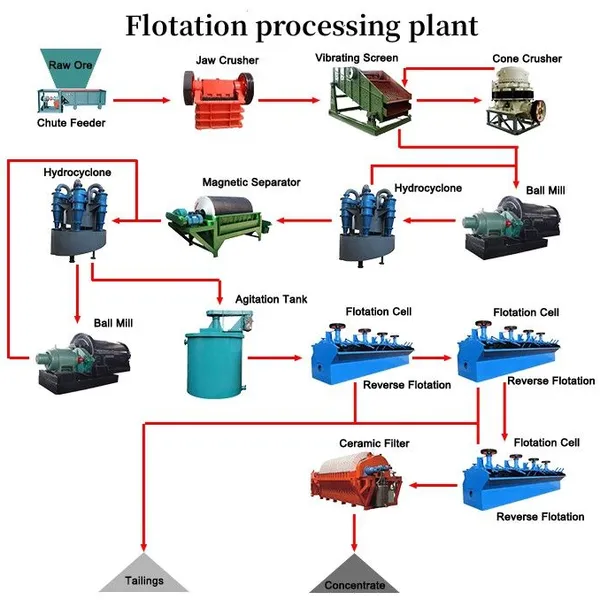
A full definition has to cover both the physical equipment and the sequence of operations. Physically, the plant includes crushing, grinding, conditioning, flotation cells, thickeners and filters, all connected by pumps and pipelines. Functionally, it is a continuous separation process that upgrades ore from a few tenths of a percent copper to a concentrate grade that smelters will accept.
The word plant also implies integration. Each stage feeds the next, so a bottleneck anywhere limits the whole line. That is why designers treat the circuit as one connected system rather than a collection of independent machines. A copper flotation plant definition that ignores this integration misses the practical reality of running one.
The table below lists the main sections of a typical concentrator and the role each one plays. Capacities are usually quoted as tonnes per day of fresh feed, and they scale with the deposit being mined.
| Section | Main equipment | Purpose |
|---|---|---|
| Crushing | Jaw and cone crushers | Reduce run-of-mine ore to a transportable size |
| Grinding | SAG mill, ball mill, cyclones | Liberate copper minerals from gangue |
| Conditioning | Conditioning tank, reagent feeders | Mix reagents with pulp before flotation |
| Flotation | Roughers, scavengers, cleaners | Separate copper minerals into froth concentrate |
| Dewatering | Thickener, filter, dryer | Produce a shippable concentrate |
| Tailings | Tailings thickener, storage | Recover water and store waste safely |
Each section has its own control philosophy, yet they only work when tuned together. A plant that optimises grinding in isolation usually pays for it in flotation performance.
2. The Copper Ore Flotation Process Step by Step
The copper ore flotation process begins with size reduction. Run-of-mine ore is crushed and then ground, normally in a SAG and ball mill circuit, until the copper minerals are liberated from the surrounding rock. Grind size is one of the most important choices in the whole flowsheet, because it sets the balance between liberation and slime generation.
Next comes conditioning. The ground pulp is diluted to a target density and mixed with reagents in a conditioning tank. Collectors coat the copper minerals and make them hydrophobic, frothers stabilise the bubbles, and modifiers such as lime adjust pH and suppress unwanted minerals. Residence time here is typically a few minutes, which is enough for the reagents to act.
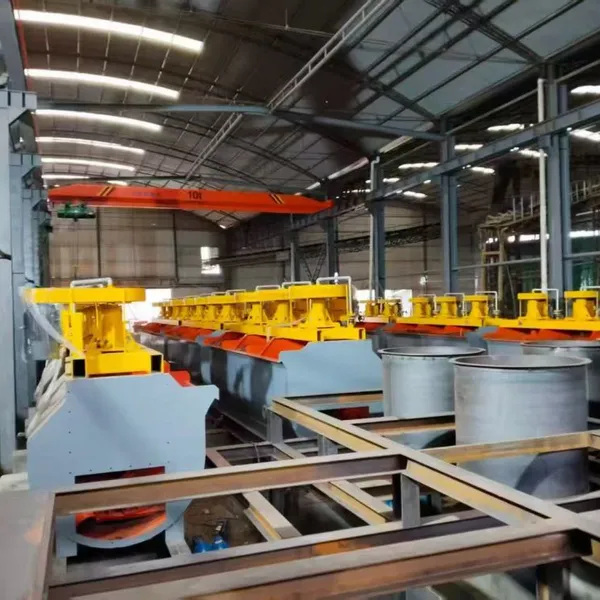
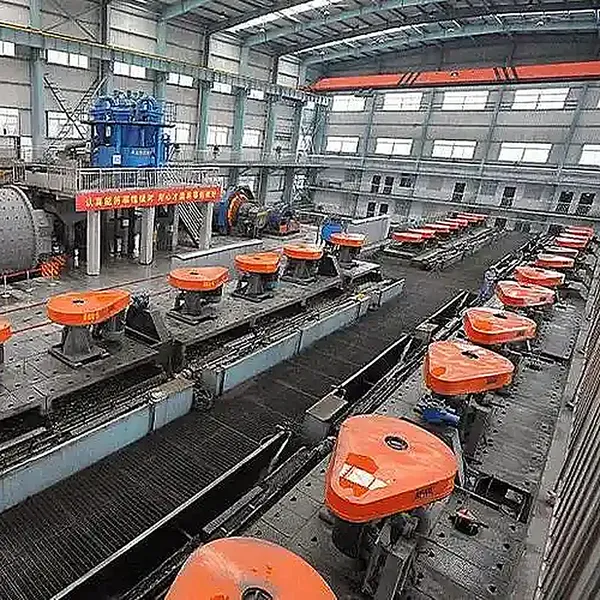
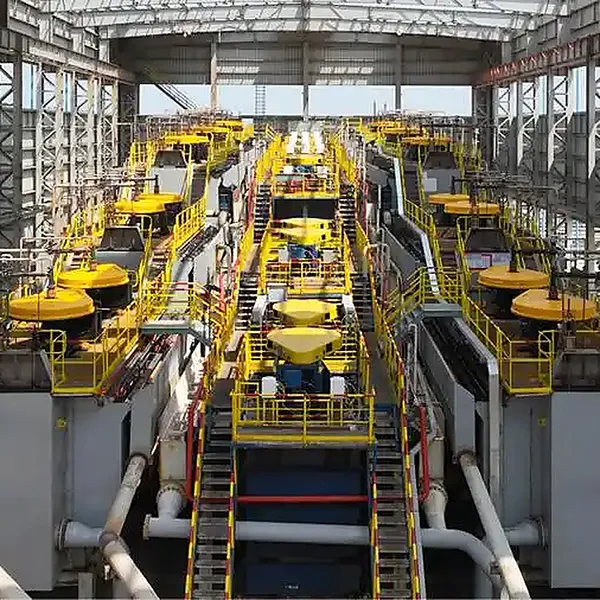
The conditioned pulp then enters the flotation bank. Air is introduced and dispersed into fine bubbles, and the hydrophobic copper particles attach to them and rise into the froth layer. The froth overflows and is collected as concentrate, while the remaining pulp continues along the circuit.
Copper recovery and concentrate grade are both read from assays taken at each stage. In broad terms, this is how the copper ore flotation process turns ground rock into a saleable product.
Dewatering closes the process. Concentrate is thickened to remove bulk water, filtered to a moist cake, and sometimes dried before shipment. Tailings from the flotation circuit are thickened so that water can be recycled, which matters most at sites where water is scarce or expensive.
- Crush and grind to liberate copper minerals.
- Condition the pulp with collectors, frothers and modifiers.
- Float in rougher, scavenger and cleaner stages.
- Thicken, filter and dry the concentrate.
- Thicken and store the tailings, recovering water.
Every step is measurable, and a well-run plant tracks grade, recovery and reagent consumption on a shift basis. Small drifts are corrected before they become large losses.
3. Sulphide Versus Oxide Ore in a Copper Sulfide Flotation Circuit
Most copper in the world comes from sulphide minerals, and a copper sulfide flotation circuit is designed specifically for them. Chalcopyrite is the most common, followed by chalcocite and bornite. These minerals respond well to xanthate collectors and float readily once liberated, which is why sulphide flotation is efficient and widely used. Feed to a copper sulfide flotation circuit is usually ground only as fine as liberation requires.
Oxide copper minerals behave quite differently. Malachite, azurite and chrysocolla do not attach to bubbles reliably with standard sulphide collectors, so oxide ores are usually treated by leaching or by sulphidisation followed by flotation. Mixing oxide and sulphide feed without accounting for this difference is a frequent source of poor recovery. A copper sulfide flotation circuit simply cannot treat oxide material as if it were the same thing.
Gangue mineralogy matters too. Pyrite is the main nuisance mineral, because it floats easily and dilutes concentrate if it is not suppressed. Lime raises pH and helps keep pyrite down, while selective collectors improve the separation further.
| Ore type | Main minerals | Typical treatment |
|---|---|---|
| Sulphide | Chalcopyrite, chalcocite, bornite | Direct flotation with xanthate collectors |
| Oxide | Malachite, azurite, chrysocolla | Leaching, or sulphidisation then flotation |
| Mixed | Both groups present | Split circuits or staged reagent addition |
Because ore bodies change with depth, many operations move from oxide to sulphide as mining advances. Designers often allow for this transition by leaving room to add flotation capacity later.
A practical case from a few years ago involved a polymetallic deposit where copper was mostly chalcopyrite with minor bornite. Locked-cycle testing showed that a primary grind around P80 of 180 microns gave good liberation, and the circuit was built with rougher, scavenger and three cleaner stages. Concentrate grade settled at about 26 percent Cu with recovery near 89 percent. Throughput was roughly 4,000 tpd at the design point.
Flowsheets of this kind are the working ground of Henan Amill Machinery Equipment Co Ltd, and commissioning support comes from the same engineering group. When the same site later added a shallow oxide zone to the feed blend, recovery fell by roughly three percentage points, and a short campaign of sulphidisation trials restored much of the loss.
4. Key Performance Indicators for Any Copper Flotation Plant
Copper recovery is the headline number, and it expresses how much of the copper in the feed ends up in concentrate. Concentrate grade is its partner, describing how rich that concentrate is. The two trade off against each other, so operators usually set a target grade and then push recovery as far as the circuit allows without breaching it.
Reagent consumption is the next indicator. Collector and frother doses are tracked in grams per tonne, and sudden changes often signal a shift in ore type or water chemistry. Lime consumption does the same for pH control. Keeping these numbers stable is usually a sign the circuit is under control.
Flotation time, or residence time, is a third key figure. It is the time pulp spends in the flotation banks, and it is normally set between roughly 12 and 20 minutes across all stages for a typical copper circuit. Too little time leaves copper unfloated, while too much time wastes capacity and can depress selectivity.
| Indicator | Typical value | What it tells you |
|---|---|---|
| Copper recovery | around 85 to 92 percent | How much copper is captured |
| Concentrate grade | typically 22 to 30 percent Cu | Quality relative to smelter terms |
| Collector dose | roughly 20 to 60 g/t | Reagent efficiency |
| Frother dose | usually 10 to 40 g/t | Froth stability and control |
| Flotation time | around 12 to 20 minutes | Capacity versus recovery balance |
| Circulating load | typically 150 to 250 percent | Circuit stability |
These figures are planning ranges, and each deposit will settle on its own numbers. What matters is measuring them consistently, because trends reveal problems that single readings hide.
5. How Circuits Are Configured and Sized for Real Ore
Circuit configuration depends on the ore, the target grade and the project scale. A simple line might use one rougher and one cleaner, while a difficult or low-grade feed may need multiple scavenger and cleaner-scavenger stages. Designers balance recovery against capital cost, because each additional stage adds pumps, cells and control complexity.
Sizing starts from testwork. Bench flotation and locked-cycle tests define the kinetics and the required residence time, which then set cell volume. A plant processing 5,000 tpd with 15 minutes of total flotation time needs a very different cell count than one running 20,000 tpd, even for the same ore.
Control systems tie it together. Pulp level, air flow and reagent dosing are the main levers an operator has, and modern plants adjust them continuously based on assays. That level of control turns a rigid flowsheet into an adaptive one.
Regrinding of cleaner feed is another common feature. It lifts concentrate grade by liberating locked particles before the last cleaning stages. The regrind mill adds cost, but it often pays back through improved smelter terms.
For projects being scoped from scratch, working with a supplier who can cover the whole chain is a practical advantage. Amill Machinery Equipment handles process design, equipment selection, manufacturing and commissioning guidance, and Amill Machinery serves mining clients across South America, Africa, Southeast Asia and the Middle East. The company builds complete mineral processing plants rather than single machines, which helps keep the flowsheet consistent from crusher to filter.
A second example, some time ago, involved a gold-copper operation where the flotation circuit was undersized for a planned expansion. The project team added a scavenger bank and a regrind mill, and total flotation time rose from about 12 minutes to roughly 18 minutes. Copper recovery improved from 86 percent to about 89.5 percent, and concentrate grade edged up to approximately 24 percent Cu. Throughput on the flotation line reached about 3,000 tpd after the upgrade, and the added stages paid back within a reasonable operating period.
Sizing is therefore never final. Good plants leave physical space and spare pumping capacity so that a future stage can be added without rebuilding the whole line.
6. FAQ
6.1 What is the simplest copper flotation plant definition?
The simplest copper flotation plant definition is this: a plant that uses froth flotation to separate copper minerals from waste rock. It grinds ore, adds reagents, and uses air bubbles to carry copper particles into a froth that is collected as concentrate. Everything else in the facility exists to support that core separation step, from crushing and grinding upstream to thickening and filtering downstream. Feed grades are usually well under one percent copper, while the concentrate produced typically runs well above twenty percent copper before it leaves the site.
6.2 How long does the copper ore flotation process take?
The copper ore flotation process is continuous, but the pulp spends a defined time inside the flotation banks. Total residence time is usually around 12 to 20 minutes across rougher, scavenger and cleaner stages combined. Grinding and conditioning add more time upstream, though those steps are not part of flotation itself. If residence time is too short, copper leaves in the tailings.
If it is too long, the circuit wastes capacity and selectivity can suffer. The copper ore flotation process should therefore be tuned around the kinetics of the specific ore, not a fixed timer.
6.3 Why is a copper sulfide flotation circuit different from an oxide circuit?
A copper sulfide flotation circuit works because sulphide minerals such as chalcopyrite and chalcocite are naturally responsive to xanthate collectors and float readily once liberated. Oxide minerals like malachite and chrysocolla do not respond the same way, so they are usually leached or sulphidised before flotation. Treating them in a standard sulphide circuit leads to low recovery and poor grade. This is why circuit design always starts with a careful mineralogical assessment of the actual ore body, since a copper sulfide flotation circuit built for one ore type may misfire on another.
6.4 What recovery and grade should a new plant target?
Most copper plants target recovery in the range of roughly 85 to 92 percent, with concentrate grade typically between 22 and 30 percent copper. The exact target depends on mineralogy, grind size and smelter terms. A cleaner concentrate sold to a smelter needs to meet a minimum grade, so recovery is often pushed only as far as that grade allows. Pushing recovery beyond that point trades grade for tonnage, and testwork should confirm what the deposit can realistically deliver before those targets are fixed.
Both figures should be agreed in writing before equipment sizing begins, because they drive cell volume, reagent cost and concentrate handling.
6.5 What determines the size of a flotation plant?
Plant size is driven mainly by the mine plan and the required throughput in tonnes per day. Ore hardness, liberation size and flotation kinetics then set how much cell volume is needed for a given residence time. A hard ore that needs a fine grind will demand more grinding power and often more flotation volume. Water availability and site conditions also influence the final layout.
Amill Machinery Equipment works through these variables during process design so the equipment package matches the real ore rather than a generic template.
Recently Posted
-
What Is a Lead Zinc Flotation Plant? A Complete Overview
October 16, 2026A lead zinc flotation plant definition is the starting point of this overview, and the term describes a mineral processing install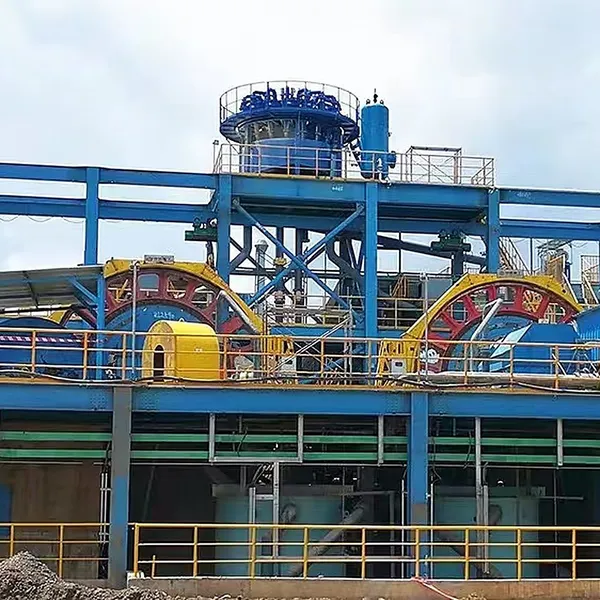 Read More
 -
Screening Plants for Indonesian Nickel Laterite
October 16, 2026Indonesia sits at the center of the global nickel supply chain, and most of that output comes from laterite ore mined in Sulawesi,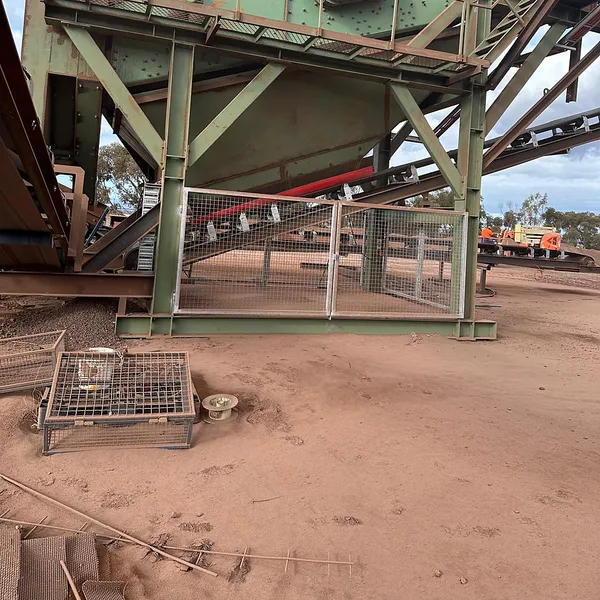 Read More
 -
Quality Control in Flotation Cell Manufacturing
October 16, 2026A flotation cell looks simple from the outside: a tank, a rotor, a drive and an air pipe. Inside, it is a pressure vessel for pulp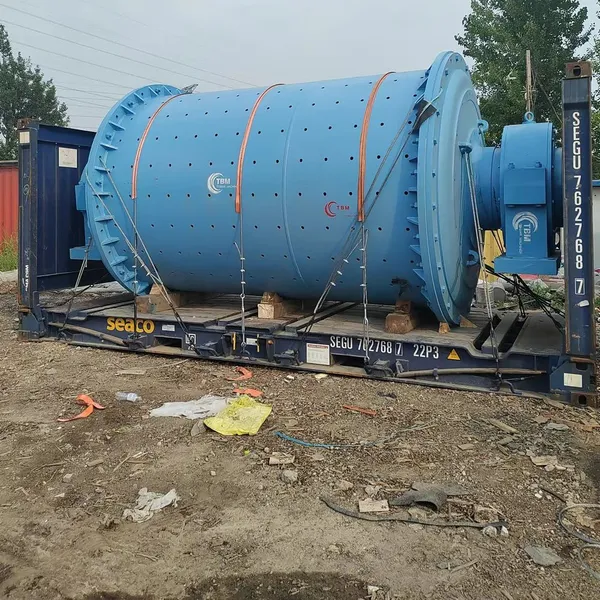 Read More
 -
Grinding Circuit Specifications for Ore Beneficiation
October 15, 2026Grinding circuit specifications are the backbone of every mineral processing flowsheet, because the mill sets the size distributio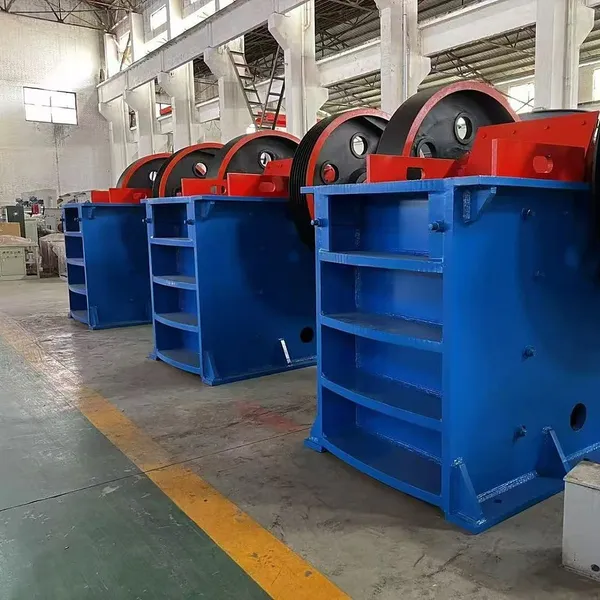 Read More

Contact Us
Recommended Products
-
 200 Tpd High Recovery Lead-zinc Ore Flotation PlantUS$ 15000MOQ: 1 Combo
 -
China Hot Sale 50-600 Tpd Copper Ore Flotation Plant With Rich ExperienceUS$ 20000MOQ: 1 Combo
-
Copper Ore Processing Flotation PlantUS$ 25000MOQ: 1 Combo
-
Hard Rock Gold Processing CIL PlantNegotiableMOQ: 1 Set
-
Gold Ore CIL Processing PlantNegotiableMOQ: 1 Set
-
Gold CIL Plant With One Stop Gold Processing EquipmentNegotiableMOQ: 1 Set
-
Gold CIP Plant for Efficient Carbon-in-Pulp Gold RecoveryNegotiableMOQ: 1 Set
-
Gold CIL Plant Engineering Design Service Metallurgical Process OptimizationNegotiableMOQ: 1 Set
-
Gold Extraction CIL Processing Plant High Efficiency Carbon Leach Gold ProcessUS$ 5000MOQ: 1 Set
-
Copper Ore Flotation Beneficiation ProcessNegotiableMOQ: 1 Set
-
Copper Flotation Plant With Advanced Flotation Machine, Customized Mineral Processing Solution, Stable Copper RecoveryNegotiableMOQ: 1 Set
-
Mobile Crusher | Crawler and Wheeled Crushing PlantNegotiableMOQ: 1 Set
-
Jaw Crusher Price ,big Stone Jaw CrusherUS$ 25000MOQ: 1 Set
-
100- 500 Tpd Gold CIL CIP Processing PlantUS$ 25000MOQ: 1 Set
-
River Stone Granite Stone Crusher PlantUS$ 25000MOQ: 1 Combo
-
500 Tpd Rotary Kiln Gypsum Production Line for Sale in AfricaUS$ 25000MOQ: 1 Combo
-
Gold CIL CIP Extraction Plant 100-300 TPD Activated Carbon Leaching 95% Recovery Rate EPC ProjectNegotiableMOQ: 1 Set
-
Gold CIL CIP Leaching Plant 100-500 TPD Activated Carbon Leaching High Efficiency EPC ProjectNegotiableMOQ: 1 Set
-
High Efficiency Lead Zinc Flotation Plant for Ore RecoveryNegotiableMOQ: 1 Set
-
Lead Zinc Flotation Processing Plant for Polymetallic OreNegotiableMOQ: 1 Set