
 Business License

Copper Flotation vs Gold CIL: Choosing the Right Process
Process selection is the decision that shapes every cost, recovery figure and permit that follows. Two routes dominate early gold and copper project studies: froth flotation and carbon-in-leach. Both work, but they serve different ores, different products and different business models. A mistake at this stage is expensive to reverse later.
This guide walks through copper flotation vs CIL process logic in practical terms. It covers ore type assessment, target products, reagent and water demands, recovery and cost structure, and environmental constraints. It closes with a selection checklist you can apply to your own sample data.
1. Start With the Ore: The First Step in Ore Type Assessment
Every flowsheet begins with an ore type assessment and a question about the ore itself, not the equipment list. Flotation depends on surface chemistry, so it needs minerals that can be made selectively hydrophobic. CIL depends on cyanide leachability, so it needs gold that dissolves freely in a cyanide solution.
A proper ore type assessment combines head assay, mineralogy, liberation size and diagnostic leaching. Sulphide-hosted gold usually responds to flotation because the sulphide minerals report to a concentrate. Oxidised and free-milling gold usually responds to cyanidation and carbon adsorption.
Copper adds a second layer. Chalcopyrite, bornite and chalcocite float well and produce a saleable copper concentrate. Oxidised copper minerals such as malachite do not float cleanly and often need acid leaching instead. Whether you pick copper flotation vs CIL process depends heavily on which copper species dominates your resource.
Gangue minerals matter just as much, and they belong in every process selection criteria list. Talc, graphite and clay can float naturally and dilute concentrate grade. This is why a mineralogy report beats a single head grade number.
2. Gold and Silver Occurrence: The Deciding Factor
The physical state of the precious metals usually decides the route more than the copper content does. Gold locked inside sulphide grains behaves very differently from gold sitting in fractures and along grain boundaries. Liberation size tells you whether grinding can free it economically.
Gold associated with sulphides is a strong signal for flotation. The sulphide minerals carry the gold into a concentrate, and smelters pay for it. Gold that is coarse, free and exposed is a strong signal for cyanidation, because a leach circuit dissolves it quickly and cheaply.
Silver follows similar rules but with more exceptions. Argentite and other silver sulphides usually float, while some silver is refractory and resists both routes. Preg-robbing carbonaceous matter will consume cyanide and load onto carbon, which makes CIL unattractive. In those cases flotation often wins by default.
2.1 Why Partial Sulphide Ores Force a Hybrid View
Many deposits are partly sulphide and partly oxide. No single route handles both zones at full efficiency. A common answer is a split flowsheet, where the sulphide zone goes to flotation and the oxide zone goes to leach.
Another common answer is flotation followed by CIL on the flotation tails. This recovers coarse sulphide gold first, then cyanides the remaining free gold. It adds capital cost but lifts total recovery, and it often pays back on large tonnage projects.
3. Target Product and Recovery Targets
The product you want to sell determines the flowsheet you build. Flotation produces a copper or gold concentrate that travels to a smelter. CIL produces loaded carbon and, after elution and electrowinning, doré bars on site.
These two products carry completely different logistics. A concentrate is heavy, wet and shipped in bulk, and smelters apply treatment and refining charges. Doré is light, high value and needs secure refining and transport. Choose the product before you choose the plant.
Recovery targets should be set from locked-cycle test work, not from textbook tables. Flotation recovery is usually quoted per mineral and per size class. CIL recovery is usually quoted as a percentage of leachable gold over a defined residence time.
Grade and recovery trade off against each other. Pushing concentrate grade too high often drops recovery, and pushing recovery too high often drops grade. Test work is the only reliable way to find the balance point for your ore.
3.1 Recovery and Cost Structure Compared
Head grade drives the economics of both routes because fixed costs spread over fewer recovered ounces as grade falls. Below roughly one gram per tonne, flotation circuits often cannot justify their complexity unless a base metal pays the bills. Grade is therefore one of the process selection criteria that deserves early attention.
Reagent cost is the sharpest difference. CIL consumes cyanide, lime and activated carbon continuously. Flotation consumes collectors, frothers and modifiers in much smaller quantities, though grinding media and power still dominate total cost.
The table below summarises how the two routes compare on the factors that most often decide a project. Treat the ranges as typical starting points for a scoping study, and confirm them with your own test results.
| Factor | Copper / Gold Flotation | Gold CIL |
|---|---|---|
| Typical feed | Sulphide ore, base metal with precious metal credit | Oxidised or free-milling gold ore |
| Target product | Copper or gold concentrate | Loaded carbon, doré bullion |
| Grind size | Usually 50 to 150 microns | Typically 75 to 200 microns |
| Main reagents | Collectors, frothers, lime | Cyanide, lime, activated carbon |
| Key risk | Slime and naturally floating gangue | Preg-robbing carbon, cyanide consumption |
| Water sensitivity | Moderate | High, dissolved salts affect leaching |
| Site product handling | Bulk concentrate shipping | On-site elution and refining |
| Typical gold recovery | Roughly 85 to 95 percent into concentrate | Around 90 to 97 percent of leachable gold |
4. Water, Reagents and Site Constraints
Water quality quietly decides routes in dry and inland regions. CIL is sensitive to dissolved salts, chloride and organic matter, all of which raise cyanide consumption. Flotation tolerates poorer water but still suffers when slimes and colloids build up in the circuit.
Reagent supply chains deserve an early look. Cyanide is regulated, hazardous and expensive to transport, so remote sites pay a premium. Collectors and frothers are easier to source but still need consistent quality to keep flotation stable.
Flotation also needs clean, stable froth, which means careful control of pH, pulp density and aeration. CIL needs controlled pH above roughly 10 to suppress cyanide loss and to protect downstream equipment. Both routes therefore rely on solid instrumentation and operator discipline.
Tailings management is the shared headache. Flotation tailings are usually benign but bulky and can contain sulphides that generate acid drainage if left exposed. Cyanide tailings need destruction and detoxification before they leave the circuit. Amill Machinery Equipment reviews water balance and reagent logistics at the process design stage, because both shape the operating cost long before the plant is built.
4.1 Environmental and Permitting Constraints
Permitting often settles the debate before economics do. Cyanide use triggers stricter handling, storage, monitoring and closure requirements in most jurisdictions. That adds cost and time to a project that might otherwise look profitable.
Flotation concentrates face their own scrutiny. Sulphide concentrate storage and shipping must control dust and runoff. Smelter terms also shift with market conditions, so concentrate revenue is less predictable than doré revenue.
Where permits for cyanide are difficult, flotation plus a gravity circuit is a proven fallback. A gravity concentrator recovers coarse free gold with no reagents at all. Our team at Henan Amill Machinery Equipment Co Ltd often recommends a gravity-flotation combination for exactly this reason.
4.2 Test Work That Settles the Question
Bench flotation tests, bottle roll leach tests and diagnostic leach tests form the core evidence set. Flotation tests vary grind size, reagent dosage and pH to build a grade-recovery curve. Leach tests vary cyanide concentration, pH and time to build a kinetics curve.
Locked-cycle tests then simulate circuit recirculation, which often reveals problems hidden in open-cycle tests. Pilot runs are worthwhile when the deposit is large or the mineralogy is complex. Skipping this step is the most common route to an expensive rebuild.
Not long ago, a deposit in Southeast Asia carried around 1.8 grams per tonne gold with minor chalcopyrite and roughly 22 percent sulphide sulphur. Bench flotation at a grind of about 75 microns gave a concentrate grading near 34 grams per tonne gold at roughly 91 percent recovery, with copper reporting to the same concentrate. A parallel CIL bottle roll reached only about 78 percent because much of the gold sat inside sulphide grains. The client therefore chose flotation and confirmed the result with a locked-cycle test before any equipment was ordered.
A second case points the other way. Some time ago, an African oxide ore assayed about 2.4 grams per tonne gold with very low sulphide sulphur. Flotation gave almost no concentrate mass, so the project switched to CIL and reached around 94 percent recovery after roughly 24 hours of leach time.
5. Practical Process Selection Criteria Checklist
Use the following process selection criteria as a checklist to narrow the two routes before you commit to detailed engineering. Answer each item from test data rather than assumptions. Revisit every criterion whenever new samples arrive, because an early ore type assessment is only as good as its data.
Confirm the dominant copper and gold mineral species first, then confirm their liberation size. Check the sulphide sulphur content, because it usually predicts whether flotation will carry the gold. This single reading often settles copper flotation vs CIL process questions before any other test is run.
Measure preg-robbing behaviour, because carbonaceous ore breaks CIL economics quickly. Test silver deportment as well, since some silver resists both routes.
Then weigh the commercial side, and apply the same criteria to both routes. Decide whether your market rewards a concentrate or a doré bar. Check cyanide regulation in your jurisdiction, and check water chemistry, because dissolved salts raise consumption. Estimate tailings volume and closure cost for both routes.
Finally, model both circuits at the same throughput and the same recovery basis. Compare capital cost, operating cost and revenue on a like-for-like basis. Only then do process selection criteria resolve into a decision rather than a preference.
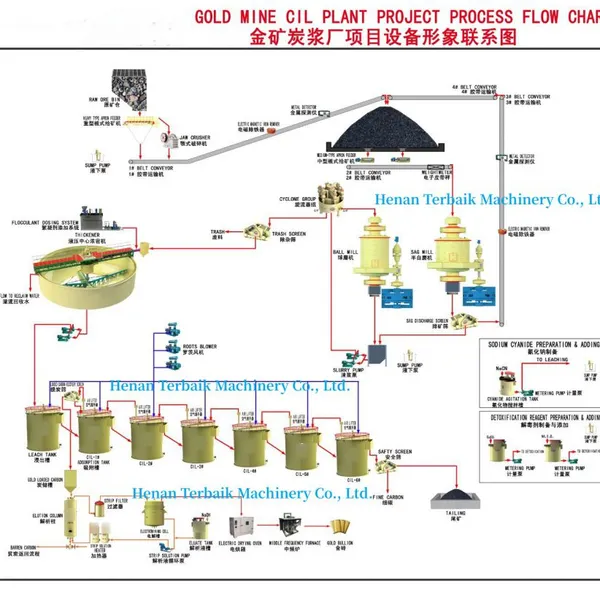
Equipment selection comes last, and it follows the flowsheet. A flotation route needs cells, conditioners, regrind mills and thickeners. A CIL route needs leach tanks, carbon adsorption stages, elution and electrowinning. Henan Amill Machinery Equipment builds both lines, and can supply the crushing, screening and grinding front end that either route shares.
6. FAQ: Copper Flotation vs CIL Process
The questions below come up in almost every early-stage project review. The short answers assume typical ore and typical site conditions, so verify them against your own test work before you commit capital.
6.1 How do I choose between copper flotation vs CIL process for a mixed ore?
Start with a split flowsheet and an ore type assessment, then let test work decide. If sulphide sulphur is meaningful and gold sits inside sulphide grains, send that zone to flotation. If the oxide zone is free-milling, leach it separately in a CIL circuit.
Running both routes at pilot scale is the only reliable way to see whether one combined circuit beats two parallel ones. Budget for mineralogy work early, because it is far cheaper than rebuilding a plant later.
6.2 What process selection criteria matter most for a gold project?
The first criterion is gold occurrence, meaning whether the gold is free or locked in sulphides. The second is preg-robbing behaviour, because carbonaceous matter ruins CIL recovery. The third is grade, since low-grade ore struggles to pay for a complex circuit.
Cyanide regulation and water chemistry follow close behind, and smelter terms for concentrate sit beside refining cost for doré. Weigh all six before you compare capital figures, because a low capital route with poor recovery rarely wins over its lifetime.
6.3 Why does preg-robbing ore usually fail in a CIL circuit?
Preg-robbing carbon in the ore behaves like the activated carbon you add on purpose. It adsorbs dissolved gold before the circuit can recover it, so the gold never reaches the elution stage. Consumption of cyanide also rises, which pushes operating cost up.
A flotation step ahead of leaching can float much of that carbon away and lift recovery. Where the carbon content is high, flotation alone or flotation plus tails leaching usually gives a better result. A diagnostic leach test reveals how much gold the carbon is stealing before you commit to a flowsheet.
6.4 What ore type assessment data should I collect before choosing?
Collect head assays for gold, copper and sulphur, then add a full mineralogy report. Measure grind size against liberation, and test both flotation and bottle roll leaching on the same composite. Record cyanide and lime consumption during leaching, and record collector dosage during flotation.
Note slime content as well, because it disturbs both circuits and raises reagent demand. Record the water chemistry from the proposed site, since dissolved salts change cyanide behaviour. With that dataset, a scoping level check between copper flotation vs CIL process takes only a few days and costs far less than a pilot campaign.
6.5 Can flotation and CIL be combined in one plant?
Yes, and the combination is common. Flotation recovers coarse and sulphide-hosted gold first, then the cleaner tails go to a CIL circuit for the remaining free gold. The two stages share crushing, grinding and thickening equipment, which limits extra capital.
A gravity concentrator is sometimes added ahead of flotation to catch coarse free gold, which protects the downstream circuit from nugget effects. Amill Machinery Equipment works with this combined configuration on gold and copper ores, and the gravity unit is usually the least expensive stage to add later if test work justifies it.
Recently Posted
-
What Is a Lead Zinc Flotation Plant? A Complete Overview
October 16, 2026A lead zinc flotation plant definition is the starting point of this overview, and the term describes a mineral processing install Read More
 -
Screening Plants for Indonesian Nickel Laterite
October 16, 2026Indonesia sits at the center of the global nickel supply chain, and most of that output comes from laterite ore mined in Sulawesi, Read More
 -
Quality Control in Flotation Cell Manufacturing
October 16, 2026A flotation cell looks simple from the outside: a tank, a rotor, a drive and an air pipe. Inside, it is a pressure vessel for pulp Read More
 -
Grinding Circuit Specifications for Ore Beneficiation
October 15, 2026Grinding circuit specifications are the backbone of every mineral processing flowsheet, because the mill sets the size distributio Read More

Contact Us
Recommended Products
-
 200 Tpd High Recovery Lead-zinc Ore Flotation PlantUS$ 15000MOQ: 1 Combo
 -
China Hot Sale 50-600 Tpd Copper Ore Flotation Plant With Rich ExperienceUS$ 20000MOQ: 1 Combo
-
Copper Ore Processing Flotation PlantUS$ 25000MOQ: 1 Combo
-
Hard Rock Gold Processing CIL PlantNegotiableMOQ: 1 Set
-
Gold Ore CIL Processing PlantNegotiableMOQ: 1 Set
-
Gold CIL Plant With One Stop Gold Processing EquipmentNegotiableMOQ: 1 Set
-
Gold CIP Plant for Efficient Carbon-in-Pulp Gold RecoveryNegotiableMOQ: 1 Set
-
Gold CIL Plant Engineering Design Service Metallurgical Process OptimizationNegotiableMOQ: 1 Set
-
Gold Extraction CIL Processing Plant High Efficiency Carbon Leach Gold ProcessUS$ 5000MOQ: 1 Set
-
Copper Ore Flotation Beneficiation ProcessNegotiableMOQ: 1 Set
-
Copper Flotation Plant With Advanced Flotation Machine, Customized Mineral Processing Solution, Stable Copper RecoveryNegotiableMOQ: 1 Set
-
Mobile Crusher | Crawler and Wheeled Crushing PlantNegotiableMOQ: 1 Set
-
Jaw Crusher Price ,big Stone Jaw CrusherUS$ 25000MOQ: 1 Set
-
100- 500 Tpd Gold CIL CIP Processing PlantUS$ 25000MOQ: 1 Set
-
River Stone Granite Stone Crusher PlantUS$ 25000MOQ: 1 Combo
-
500 Tpd Rotary Kiln Gypsum Production Line for Sale in AfricaUS$ 25000MOQ: 1 Combo
-
Gold CIL CIP Extraction Plant 100-300 TPD Activated Carbon Leaching 95% Recovery Rate EPC ProjectNegotiableMOQ: 1 Set
-
Gold CIL CIP Leaching Plant 100-500 TPD Activated Carbon Leaching High Efficiency EPC ProjectNegotiableMOQ: 1 Set
-
High Efficiency Lead Zinc Flotation Plant for Ore RecoveryNegotiableMOQ: 1 Set
-
Lead Zinc Flotation Processing Plant for Polymetallic OreNegotiableMOQ: 1 Set