
 Business License

Factory Acceptance Testing for Ore Beneficiation Equipment
A machine that runs perfectly in a workshop video can still fail on your site. The gap between a short demonstration and a real production shift is where most disputes begin. Factory acceptance testing exists to close that gap before the equipment leaves the works.
This guide explains what a factory acceptance test covers, how each test is run, and which items a buyer should watch in person. It also covers documents, timing, common points of argument, and the checks that belong on a loading checklist.
1. What a Factory Acceptance Test Actually Covers
Factory acceptance testing is the structured trial of a machine against agreed performance parameters before shipment. It happens at the manufacturer's works, with the buyer or a representative present. The purpose is to confirm that the unit meets the order specification in both mechanical and functional terms.
The test is not a third-party audit. It is a working session between buyer and seller in which measurements are taken, recorded and signed. Our team at Henan Amill Machinery Equipment Co Ltd treats it as the last gate before packing, and every machine is tested before shipment.
A complete test usually combines a no-load run, a load run under representative feed, and a set of measurements on power draw, temperature, vibration and alignment. Instruments cover stroke, speed, airflow and electrical parameters. Records from the session become the equipment inspection report.
Scope should be agreed in writing before the visit. That includes which units are tested, at what throughput, for how long, and what acceptance limits apply. Ambiguity here is the single most common source of late-stage argument.
2. No-Load and Load Running Tests
A no-load run proves the mechanical assembly before material is introduced. The machine runs with empty chambers for a defined period, typically one to four hours. Engineers watch for unusual noise, vibration, oil leakage and bearing temperature drift.
Acceptance limits for bearing temperature are usually set at a modest rise above ambient, often around 35 to 40 degrees Celsius at steady state. Any rapid climb stops the test and triggers inspection. Alignment and foundation bolt torque are checked once the machine reaches thermal stability.
A load run then introduces representative feed at a stated rate for several hours, usually four to eight. This stage reveals blockage, surging, uneven discharge and power spikes. Feed size, moisture content and throughput are logged every half hour or so.
Continuity matters more than peak performance. A machine that holds steady output for six hours is a better result than one that hits a higher figure for twenty minutes. The equipment inspection report should show the trend, not just the highlight.
3. Machine-Specific Checks and Measurement Points
Each equipment type has checks that matter more than the rest. The table below lists the core measurement points for the main beneficiation machines, with typical values to expect during a stable load run.
Use the ranges as planning guidance rather than fixed rules. Actual acceptance limits depend on the model, the duty and the feed, and they should be written into the purchase order.
| Equipment | Key checks | Typical values to expect |
|---|---|---|
| Flotation cell | Airflow rate, impeller speed, motor amps, froth stability | Airflow per cell roughly 1 to 3 cubic metres per minute |
| Jaw or cone crusher | Discharge setting, bearing temperature, throughput | Closed side setting set to order, bearing rise under about 40 degrees Celsius |
| Vibrating screen | Amplitude, stroke, trajectory, side plate motion | Amplitude typically 4 to 8 mm, straight or elliptical path |
| Ball mill | Speed, liner bolt torque, gear mesh, oil pressure | Speed around 60 to 75 percent of critical |
| Gravity concentrator | Stroke frequency, water distribution, bowl balance | Frequency set to ore size, usually 200 to 400 cycles per minute |
| Thickener drive | Torque, rake load, lift travel | Torque well inside the rating at design solids |
3.1 Flotation Machine Airflow and Impeller Checks
Flotation performance depends on a stable, measurable air supply. The test should confirm airflow at the design setpoint, and confirm that the adjustment valve moves smoothly across its full range. Impeller speed is then measured against the duty value, usually with a handheld tachometer.
Motor current during the load run indicates whether the impeller is biting harder than expected. A reading above the rated figure at design pulp density signals a problem in the rotor or stator. Froth behaviour is also observed, since a stable froth across the cell is a good sign of a healthy air path.
Some buyers ask for an airflow curve across several settings rather than a single point. That is a reasonable request and usually adds only one to two hours to the test schedule.
3.2 Crusher Discharge Setting and Bearing Temperature
Closed side setting is checked physically and, where fitted, verified against the hydraulic readout. The measured setting should match the order value within the stated tolerance. Throughput is then recorded at that setting with representative feed.
Bearing temperature is watched from cold start through thermal stability, and readings are taken at fixed intervals. A temperature that keeps climbing after several hours is a stop condition. Lubrication pressure and flow are verified at the same time, because oil supply explains most temperature problems.
3.3 Screen Amplitude and Trajectory
Amplitude and stroke are measured at the side plates during normal running. Readings should be even on both sides, because unequal amplitude points to misaligned drive weights. Trajectory is checked visually or with a stroke card to confirm the intended throw angle.
Spring compression and drive belt or coupling condition are inspected at the same time. A screen that runs hot at the bearings or shakes the supporting frame will not last long on site. Panel clamping and deck alignment also belong on the list, since loose panels cause rapid damage.
3.4 Electrical and Control Interlocks
Electrical checks confirm that motor rotation, overload protection and starter settings match the drawings. Control interlocks are then tested by simulating fault conditions and confirming the correct shutdown response. Emergency stops are tested on every unit before the session closes.
Instrument loops for level, flow and pressure are calibrated and cross-checked against local gauges. Alarm and trip setpoints are recorded in the equipment inspection report. Where a plant control system is supplied, a full start sequence is run to confirm the logic order.
4. Duration, Records and the Equipment Inspection Report
Total factory acceptance testing time depends on how many units are involved. A single machine often needs one day, while a full line with several units and a control system usually needs three to five days. Buyers should plan to attend the load runs rather than the no-load runs alone.
Every reading should be written down at the time it is taken, with the instrument identified. Records without an instrument reference are hard to defend later. Photos and short videos of the load runs add value, particularly for vibration and froth behaviour.
The equipment inspection report should carry the machine list, serial numbers, test chronology, measured values against acceptance limits, and the documents supplied. That document set normally includes test records, motor test data, material certificates, spare parts lists and the operation and maintenance manual.
These are physical documents about the goods themselves rather than opinions from an outside body. The report is simply the buyer's evidence that the machine performed as ordered, and it travels with the shipment.
Both sides should sign the report before packing begins, with any open items listed as punch points. Punch points with a clear owner and a clear deadline keep a project moving. An unsigned report is the weakest possible position if a dispute arises months later.
5. Common Disputes and the Loading Checklist
The most frequent argument concerns test conditions versus site conditions. A machine tested on dry, screened feed will behave differently under wet, sticky ore. Buyers should agree on representative feed before the test, and note any deviation in the report.
Power supply differences cause the second most common dispute. Voltage and frequency at the works rarely match the destination site exactly, so motor performance figures should be referenced to an agreed supply. Ambient temperature and altitude also change cooling behaviour.
Some buyers expect a full production guarantee from a short test. That is unreasonable for everyone involved. A test proves mechanical integrity and function, while long-term wear and throughput belong to commissioning and warranty discussions. Pre shipment testing closes the gap between the last works run and the moment the machine is loaded.
5.1 Pre-Shipment Testing Conditions to Agree Up Front
Feed specification, throughput, running hours and acceptance limits should all appear in the purchase order. So should the instruments to be used and the units of measurement. Agree who signs the report, and what happens if a limit is missed.
Decide in advance whether a re-test is allowed and what it costs. Decide whether the buyer attends in person or by video call. Written agreement on these points removes most of the friction from pre shipment testing, and it protects both sides if a reading misses its limit. Henan Amill Machinery Equipment issues a test record for every unit, so the agreed limits can be checked against measured values line by line.
One case shows how quickly a test earns its cost. A few years ago, a buyer in South America ordered a flotation line with eight cells and a ball mill. During load testing the third cell showed an airflow about 15 percent below its setpoint while the other seven held steady, and inspection found a partly blocked air manifold gasket that was replaced the same day. The team then extended the run from four hours to roughly six to confirm stability across the whole bank, and the buyer signed the equipment inspection report the next day.
A second case shows the value of a hard limit. Some time ago, a screening unit bound for Africa showed a bearing rise of about 45 degrees Celsius, above the agreed limit. The drive weights were rebalanced and the unit re-tested for four hours, settling near 32 degrees.
5.2 Container Loading Checks Before Dispatch
The loading checklist starts with the report itself, and it is the final step of pre shipment testing. Confirm that all punch points are closed and signed off before anything is loaded. Check that every machine matches its serial number on the packing list.
Loose parts, tools, spare liners, motors and instruments should be boxed, labelled and cross-checked against the packing list. Foundation bolts, drive belts and coupling spares should be included when the order calls for them. Every crate needs a visible mark that matches the shipping documents.
Protection matters more than buyers expect. Exposed shafts, unpainted faces and control panels need covers and moisture protection for a sea voyage. Rust-preventive coating should be applied to machined surfaces, and pre shipment testing should confirm that each coating is in place. Amill Machinery inspects and records each machine before dispatch, and every machine is tested before shipment.
Finally, confirm container weights and stowage against the shipping plan. Heavy units go low and centred, with timber bracing to stop movement. Photographs of the loaded container, taken after bracing, are a cheap form of protection for both sides.
6. FAQ: Factory Acceptance Test for Beneficiation Equipment
These questions come up whenever a buyer plans a works visit for the first time. The answers reflect standard practice at Amill Machinery Equipment, and they should be adapted to your own order and site conditions.
6.1 How long does a factory acceptance test usually take?
A single machine typically needs around one day, covering a no-load run of one to four hours and a load run of four to eight hours. A full line with several units and a control system usually needs three to five days, because each unit must be run and each interlock must be tested before the next stage starts. Add time for a re-test if a reading misses its limit. Buyers planning international travel should ask for a schedule before booking flights.
6.2 What should a factory acceptance test include for a flotation cell?
A flotation cell test should confirm airflow at the design setpoint, impeller speed against the duty value, and motor current at design pulp density. It should also check froth stability across the cell surface and the smooth travel of the airflow valve. Bearing temperature and lubrication supply belong on the same sheet. Dealers and end users often ask for an airflow curve across several settings, which is a reasonable addition to the standard test and adds only an hour or so.
6.3 Why does the test feed differ from the feed on my site?
Works testing uses dry, screened and often crushed feed because it is easy to handle and repeat. Site feed is usually wet, sticky and variable, so throughput and power draw will differ from the works figure by a margin that can reach double digits. The test still proves mechanical integrity, alignment, control function and stable operation at the design setpoint. Agree the deviation in writing before the visit, and write site performance expectations into the warranty terms rather than the acceptance limits.
6.4 What should the equipment inspection report contain?
The equipment inspection report should list every machine and serial number, the test chronology, and measured values against the agreed acceptance limits. It should record instruments used and the units of measurement. Supporting documents normally include test records, motor data, material certificates, spare parts lists and the maintenance manual.
Punch points should be listed with owners and deadlines, and photographs should be attached for each measured value. Both parties should sign the report before packing starts, so the evidence is complete and unambiguous. Keep one copy with the shipping documents and one in the works file.
6.5 What is checked during pre shipment testing?
Pre shipment testing confirms that the machine still meets its test values after final assembly and paint. It covers rotation, control function, safety devices and protective coating. Documents are cross-checked against the packing list, and loose parts are boxed and labelled.
Container bracing and weight distribution are confirmed at the same time, and the loading plan should match the shipping documents. A short video of the final run is a useful record for the buyer, and it costs the supplier very little. Confirm one last time that every machine is tested before shipment.
Recently Posted
-
What Is a Lead Zinc Flotation Plant? A Complete Overview
October 16, 2026A lead zinc flotation plant definition is the starting point of this overview, and the term describes a mineral processing install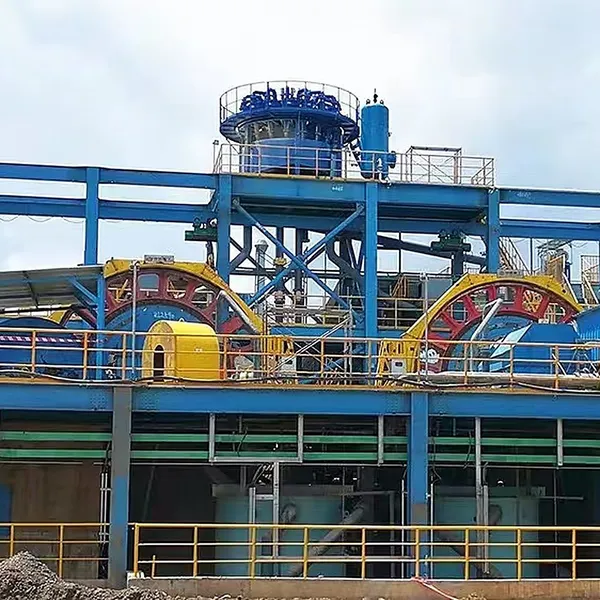 Read More
 -
Screening Plants for Indonesian Nickel Laterite
October 16, 2026Indonesia sits at the center of the global nickel supply chain, and most of that output comes from laterite ore mined in Sulawesi,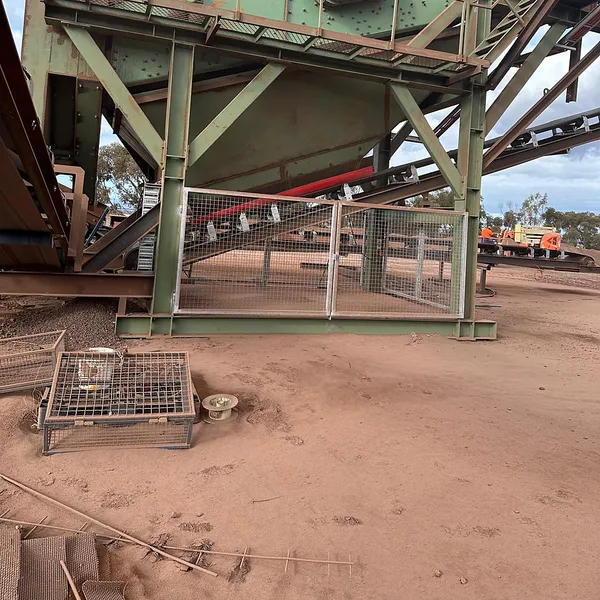 Read More
 -
Quality Control in Flotation Cell Manufacturing
October 16, 2026A flotation cell looks simple from the outside: a tank, a rotor, a drive and an air pipe. Inside, it is a pressure vessel for pulp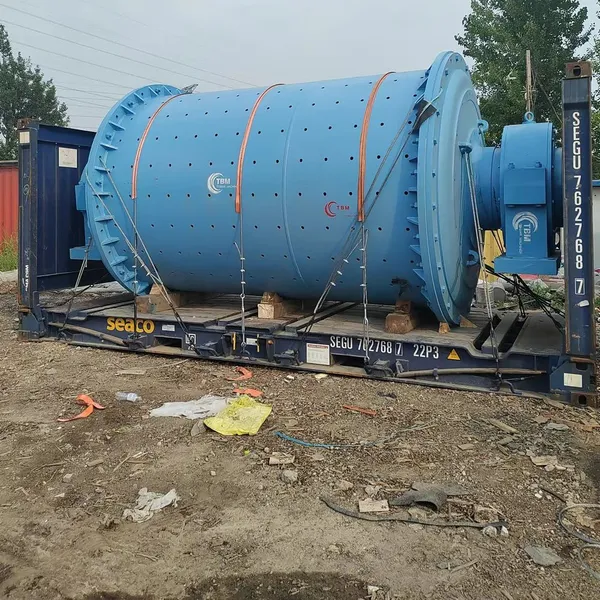 Read More
 -
Grinding Circuit Specifications for Ore Beneficiation
October 15, 2026Grinding circuit specifications are the backbone of every mineral processing flowsheet, because the mill sets the size distributio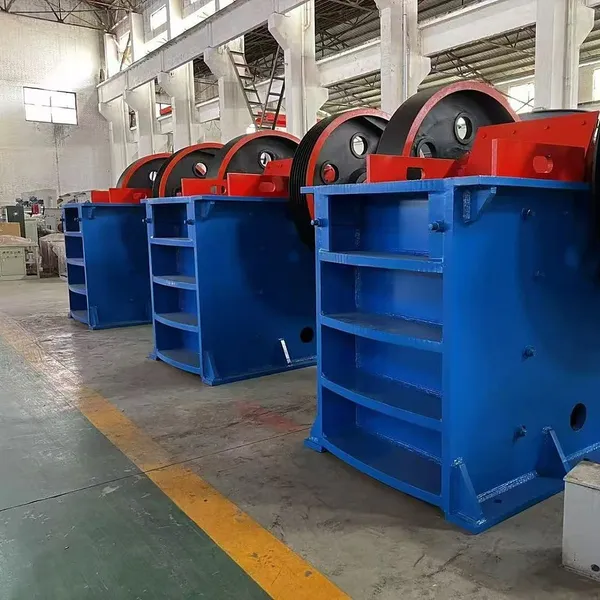 Read More

Contact Us
Recommended Products
-
 200 Tpd High Recovery Lead-zinc Ore Flotation PlantUS$ 15000MOQ: 1 Combo
 -
China Hot Sale 50-600 Tpd Copper Ore Flotation Plant With Rich ExperienceUS$ 20000MOQ: 1 Combo
-
Copper Ore Processing Flotation PlantUS$ 25000MOQ: 1 Combo
-
Hard Rock Gold Processing CIL PlantNegotiableMOQ: 1 Set
-
Gold Ore CIL Processing PlantNegotiableMOQ: 1 Set
-
Gold CIL Plant With One Stop Gold Processing EquipmentNegotiableMOQ: 1 Set
-
Gold CIP Plant for Efficient Carbon-in-Pulp Gold RecoveryNegotiableMOQ: 1 Set
-
Gold CIL Plant Engineering Design Service Metallurgical Process OptimizationNegotiableMOQ: 1 Set
-
Gold Extraction CIL Processing Plant High Efficiency Carbon Leach Gold ProcessUS$ 5000MOQ: 1 Set
-
Copper Ore Flotation Beneficiation ProcessNegotiableMOQ: 1 Set
-
Copper Flotation Plant With Advanced Flotation Machine, Customized Mineral Processing Solution, Stable Copper RecoveryNegotiableMOQ: 1 Set
-
Mobile Crusher | Crawler and Wheeled Crushing PlantNegotiableMOQ: 1 Set
-
Jaw Crusher Price ,big Stone Jaw CrusherUS$ 25000MOQ: 1 Set
-
100- 500 Tpd Gold CIL CIP Processing PlantUS$ 25000MOQ: 1 Set
-
River Stone Granite Stone Crusher PlantUS$ 25000MOQ: 1 Combo
-
500 Tpd Rotary Kiln Gypsum Production Line for Sale in AfricaUS$ 25000MOQ: 1 Combo
-
Gold CIL CIP Extraction Plant 100-300 TPD Activated Carbon Leaching 95% Recovery Rate EPC ProjectNegotiableMOQ: 1 Set
-
Gold CIL CIP Leaching Plant 100-500 TPD Activated Carbon Leaching High Efficiency EPC ProjectNegotiableMOQ: 1 Set
-
High Efficiency Lead Zinc Flotation Plant for Ore RecoveryNegotiableMOQ: 1 Set
-
Lead Zinc Flotation Processing Plant for Polymetallic OreNegotiableMOQ: 1 Set